

























































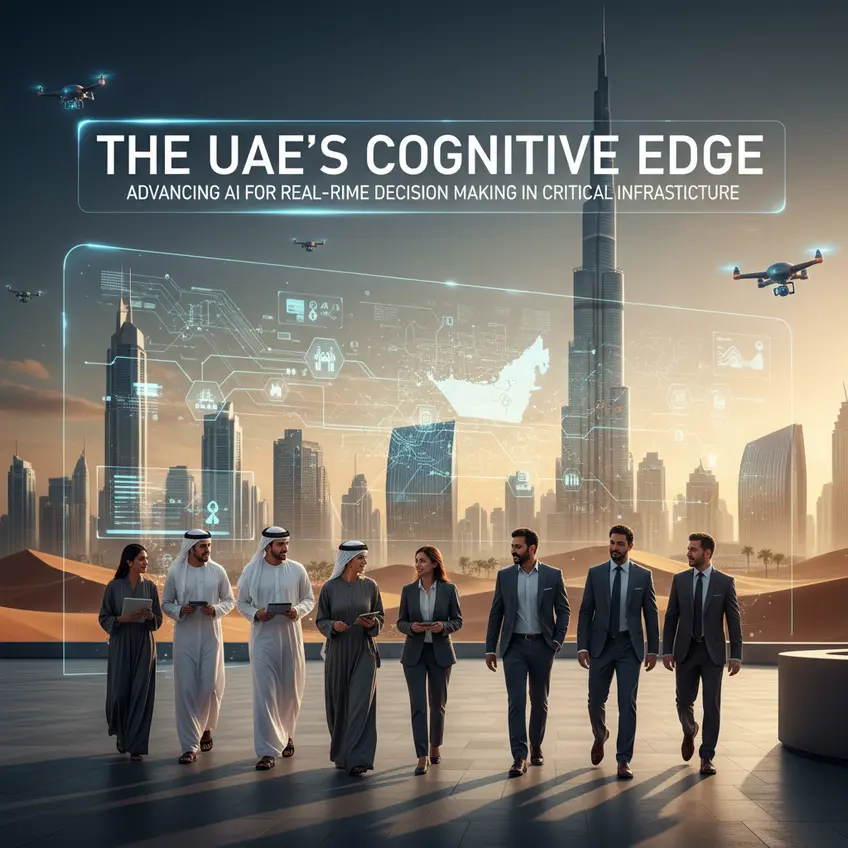
The United Arab Emirates is rapidly cementing its position as a global leader in technological innovation, particularly within the realm of Artificial Intelligence. As a nation driven by visionary leadership and ambitious developmental goals, the UAE understands that safeguarding its critical infrastructure – from energy grids and transportation networks to vital public services – is paramount for sustained growth and societal well-being. This requires not just advanced technology, but a cognitive edge that enables proactive, real-time decision making. The integration of AI into these crucial sectors is transforming traditional reactive approaches into intelligent, predictive frameworks. Dubai and Abu Dhabi, as epicenters of this digital transformation, are pioneering sophisticated AI applications that enhance operational efficiency, ensure security, and build unparalleled resilience against unforeseen challenges. This extensive commitment to AI-driven strategies signifies a profound shift, positioning the UAE at the forefront of a new era of smart infrastructure management and setting a global benchmark for future-proof development.
Foundations of AI in Critical Infrastructure: Definitions, History, and Key Principles
Artificial Intelligence, in its essence, refers to the simulation of human intelligence processes by machines, especially computer systems. These processes include learning (the acquisition of information and rules for using the information), reasoning (using rules to reach approximate or definite conclusions), and self-correction. Within the context of critical infrastructure, AI transcends basic automation, delving into complex data analysis, predictive modeling, and autonomous response systems. The history of AI's application in infrastructure, while nascent in its current advanced form, traces back to early expert systems used for diagnostics in industrial control. However, the last decade has seen an exponential surge in capabilities, driven by advancements in machine learning, deep learning, and robust data processing. Key principles underpinning this integration include:
- Predictive Analytics: Utilizing historical and real-time data to forecast potential failures, demand fluctuations, or security threats.
- Pattern Recognition: Identifying anomalies in vast datasets that might indicate impending issues or vulnerabilities.
- Automated Response: Enabling systems to take immediate, pre-defined actions based on AI-driven insights, minimizing human intervention in critical moments.
- Optimized Resource Allocation: AI algorithms can dynamically manage resources, from energy distribution to traffic flow, ensuring maximum efficiency and minimal waste.
The UAE's strategic vision has been instrumental in fostering an environment where these principles are not just theoretical but are actively deployed across its critical assets, reinforcing the nation's commitment to innovation and security.
The ambitious digital transformation agenda in the UAE has spurred significant demand for expert technology partners, making the choice of a website creation agency in Dubai & UAE a pivotal step for businesses seeking to thrive in this technologically advanced landscape.
Tendances actuelles & statistiques récentes (2024/2025) Shaping the UAE's AI Infrastructure
The landscape of Artificial Intelligence in critical infrastructure within the UAE is characterized by dynamic trends and robust statistical growth. As we move through 2024 and into 2025, the focus intensifies on hyper-automation, explainable AI (XAI), and the pervasive integration of edge computing. The UAE government's strategic investments, such as the National AI Strategy 2031, are directly translating into tangible deployments. Reports indicate that the AI market in the Middle East and Africa is projected to grow significantly, with the UAE being a primary driver, expecting billions in AI-related contributions to its GDP. This economic impetus fuels further research and development, particularly in areas concerning smart cities and resilient national infrastructure. The adoption rate of AI in sectors like transportation, utilities, and public safety is seeing double-digit growth, driven by both public and private sector initiatives aimed at enhancing operational intelligence and predictive capabilities. Recent studies highlight that over 70% of UAE-based organizations are either piloting or implementing AI solutions, a testament to the nation's aggressive digital adoption strategy.
The Rise of AI-Powered Predictive Maintenance in Utilities
One of the most impactful trends is the widespread adoption of AI for predictive maintenance in utility sectors. Electricity grids, water networks, and communication infrastructures in the UAE are increasingly leveraging machine learning algorithms to analyze sensor data from millions of points. This allows for the early detection of anomalies, forecasting equipment failures before they occur, and optimizing maintenance schedules. The result is a significant reduction in downtime, operational costs, and an enhancement in service reliability for residents and businesses across Dubai and the broader UAE. This proactive stance is crucial for maintaining the seamless functionality of a rapidly expanding urban environment.
Cybersecurity Fortification through AI and Machine Learning
Given the increasing sophistication of cyber threats, especially against critical national assets, AI and machine learning are becoming indispensable tools for cybersecurity. UAE entities are deploying AI-driven systems that can identify, analyze, and neutralize cyber threats in real-time with unparalleled speed and accuracy. These systems learn from evolving attack patterns, adapt their defenses, and provide automated responses to safeguard sensitive operational technology (OT) and information technology (IT) systems. This enhanced cyber resilience is a core pillar of the UAE's national security strategy, ensuring the integrity and continuity of essential services.

For businesses seeking to establish a strong online presence and leverage these digital trends, partnering with a knowledgeable web agency in Dubai & UAE is essential. Such an agency can provide the expertise needed to navigate the complex digital ecosystem.
Comparatif des principales options / solutions d'IA pour l'infrastructure
The market for AI solutions in critical infrastructure is diverse, offering a spectrum of technologies tailored to different operational needs. Selecting the right solution involves a thorough understanding of an organization's specific challenges, existing infrastructure, and long-term strategic goals. From advanced sensor networks feeding data to sophisticated neural networks for anomaly detection, the choices are plentiful. This comparison focuses on distinct categories of AI solutions that are gaining traction in the UAE and globally, each bringing unique strengths to the table for enhancing real-time decision making.
Tableau comparatif détaillé des solutions d'IA
Guide pratique: Implementing AI for Real-time Infrastructure Monitoring in the UAE
Implementing advanced AI solutions for critical infrastructure demands a structured, multi-phase approach. The process goes beyond mere technology acquisition, encompassing strategic planning, robust data management, and continuous optimization. For organizations in the UAE looking to harness the power of AI for real-time decision making, this guide outlines the essential steps to ensure a successful and impactful deployment.
Step 1: Comprehensive Needs Assessment & Data Strategy Formulation
Begin by conducting a detailed assessment of your current infrastructure, identifying specific pain points, operational inefficiencies, and critical vulnerabilities that AI can address. This involves engaging stakeholders across departments, from operations to security. Concurrently, formulate a comprehensive data strategy. AI models are only as good as the data they consume, so understanding data sources, quality, accessibility, and storage requirements is paramount. This foundational step includes planning for data aggregation from various sensors, IoT devices, SCADA systems, and historical records. A clear data governance framework is vital to ensure data integrity and compliance, a crucial element for any forward-thinking marketing consultancy agency in Dubai or infrastructure firm.
Step 2: Pilot Project Implementation & Iterative Model Development
Instead of a full-scale deployment, initiate a focused pilot project on a contained segment of your critical infrastructure. This allows for rigorous testing of AI models, data pipelines, and integration with existing systems in a controlled environment. Work closely with AI developers and domain experts to iteratively refine the models, adjusting parameters and algorithms based on real-world performance. This phase is crucial for demonstrating value, gathering user feedback, and identifying unforeseen challenges. It also provides an opportunity to build internal expertise and champions for the technology, fostering a culture of innovation that is essential for long-term success, especially when considering complex projects like those handled by a website development agency in Dubai that understands intricate system integrations.
Step 3: Scalable Deployment, Integration & Continuous Optimization
Once the pilot project yields proven results and the AI models are robust, plan for scalable deployment across the broader critical infrastructure. This involves seamless integration with legacy systems, ensuring interoperability, and designing resilient network architectures. Post-deployment, the process shifts to continuous monitoring and optimization. AI models are not static; they require ongoing training with new data, performance tuning, and adaptation to evolving operational conditions and threat landscapes. Regular audits, performance reviews, and updates are necessary to maintain the AI's cognitive edge and ensure it continues to provide accurate, real-time insights for informed decision making. This ongoing commitment ensures the longevity and effectiveness of the AI investment.
Common Errors and Myths to Debunk in UAE AI Infrastructure Deployment
The journey towards an AI-powered critical infrastructure in the UAE, while promising, is not without its pitfalls. Several common errors and pervasive myths can hinder successful implementation and undermine the true potential of AI. Addressing these misconceptions head-on is crucial for organizations to navigate the complexities effectively and ensure their investments yield the desired strategic advantages.
Myth 1: AI is a "Set-It-and-Forget-It" Solution for All Problems
Many decision-makers mistakenly believe that once an AI system is deployed, it will autonomously solve all operational challenges without further human intervention or oversight. This is far from the truth. AI requires continuous monitoring, training with new data, and periodic calibration to remain effective and adapt to evolving conditions. For example, a predictive maintenance AI model needs updated sensor data, environmental changes, and new failure patterns to maintain its accuracy. Without this ongoing human-in-the-loop approach, AI systems can become obsolete or even generate erroneous insights, leading to costly mistakes in critical infrastructure management. Investing in a robust support and maintenance framework, often provided by a dedicated mobile app development agency in Dubai UAE for software solutions, is just as crucial as the initial deployment.
Myth 2: More Data Automatically Means Better AI Performance
While data is the lifeblood of AI, the sheer volume of data does not automatically guarantee superior AI performance. The quality, relevance, and cleanliness of data are far more critical. Feeding an AI model with noisy, incomplete, or biased data will lead to flawed insights and unreliable predictions. In critical infrastructure, where decisions have high stakes, data integrity is paramount. Organizations must invest heavily in data governance, cleansing, and labeling processes. A smaller, meticulously curated dataset often yields better results than a massive, unmanaged one. Focusing on data quality upfront can save significant time and resources down the line, preventing the deployment of AI systems that operate on faulty assumptions.
Myth 3: AI Will Immediately Replace All Human Roles in Infrastructure
The fear of AI-driven job displacement is a common concern, but in the context of critical infrastructure, AI is primarily an augmentation tool, not a wholesale replacement for human expertise. AI excels at processing vast amounts of data, identifying patterns, and making predictions at speeds impossible for humans. However, complex problem-solving, ethical decision-making, strategic planning, and hands-on maintenance still require human intelligence and judgment. AI tools empower human operators and engineers with unprecedented insights, allowing them to make more informed decisions, respond faster to incidents, and focus on higher-value tasks. The future workforce in critical infrastructure will be one where humans and AI collaborate seamlessly, leveraging each other's strengths for optimal outcomes.
Best Practices / Advanced Strategies for AI in UAE Critical Infrastructure
To truly unlock the transformative potential of AI in the UAE's critical infrastructure, organizations must move beyond basic implementations and adopt advanced strategies. These best practices focus on creating a synergistic environment where technology, people, and processes align to maximize AI's real-time decision-making capabilities and ensure long-term sustainability.
Fostering a Data-Centric Culture and Governance Framework
The bedrock of effective AI deployment is a robust data-centric culture. This means prioritizing data collection, quality, and accessibility across all operational units. Implementing a comprehensive data governance framework is crucial, defining policies for data ownership, security, privacy, and lifecycle management. This ensures that the data fueling AI models is accurate, reliable, and compliant with regulatory standards, which is vital for any branding Company in Dubai and for securing public trust in AI applications.
Embracing Hybrid AI Models for Enhanced Explainability
For critical infrastructure, "black box" AI models can be problematic due to the need for accountability and transparency. Adopting hybrid AI approaches, combining traditional rule-based systems with machine learning, can offer both performance and explainability. This allows operators to understand the reasoning behind AI recommendations, building trust and facilitating quicker, more confident decision-making, especially in high-stakes scenarios where understanding the "why" is as important as the "what."
Implementing Robust AI Ethics and Governance Guidelines
As AI becomes more autonomous, establishing clear ethical guidelines and governance frameworks is non-negotiable. This involves addressing potential biases in algorithms, ensuring fairness, maintaining transparency, and defining accountability mechanisms for AI-driven decisions. The UAE, with its forward-thinking regulatory environment, is uniquely positioned to lead in this area, setting global standards for responsible AI deployment in critical sectors. This is a vital consideration for any entity, including those focused on personal branding Dubai & UAE, seeking to maintain trust and credibility.
Case Studies: Concrete Examples of AI's Impact in UAE Infrastructure
The theoretical benefits of AI in critical infrastructure are substantial, but the real impact is best understood through concrete examples from the UAE. These case studies highlight how various sectors are already leveraging AI to achieve operational excellence, enhance safety, and drive smart city initiatives, showcasing the nation's commitment to innovation and its leadership in the global AI landscape.
Dubai's RTA and Smart Traffic Management
The Roads and Transport Authority (RTA) in Dubai has been at the forefront of integrating AI into its traffic management systems. By deploying advanced sensors, cameras, and machine learning algorithms, the RTA can analyze real-time traffic flow, predict congestion hotspots, and dynamically adjust traffic signals. This AI-powered approach has led to significant reductions in travel times, improved accident response, and more efficient public transport routing, contributing directly to Dubai's vision of becoming the smartest city globally. The system continuously learns from traffic patterns and special events, optimizing urban mobility with unprecedented precision.
DEWA's AI-Driven Utility Optimization
The Dubai Electricity and Water Authority (DEWA) has made significant strides in using AI to optimize its utility networks. Through smart meters and grid sensors, DEWA collects vast amounts of data, which AI algorithms analyze to predict equipment failures, manage demand fluctuations, and detect anomalies that could indicate leaks or inefficiencies. This proactive approach has not only enhanced the reliability of electricity and water supply but also contributed to substantial reductions in operational costs and environmental impact, aligning with the UAE's sustainability goals. DEWA's smart grid initiatives are a prime example of AI's power in ensuring essential services are resilient and efficient.

These sophisticated deployments underscore the need for high-quality digital platforms, often necessitating the expertise of a professional website development agency in Dubai to build the necessary user interfaces and data visualization dashboards.
The 2025-2026 Digital Leap: Future Prospects of AI in UAE Critical Infrastructure
As the UAE looks towards the mid-2020s and beyond, the future prospects of AI in critical infrastructure are nothing short of revolutionary. The nation's strategic foresight and relentless pursuit of technological advancement indicate a trajectory where AI will become even more embedded, intelligent, and autonomous. The focus will shift towards hyper-integrated systems, leveraging advanced cognitive computing capabilities to create truly self-optimizing and self-healing infrastructure. Expect to see breakthroughs in quantum AI applications for enhanced security, widespread deployment of AI-powered digital twins for predictive simulation, and the proliferation of autonomous decision-making agents across various critical sectors. The synergy between AI, IoT, 5G, and blockchain will create an unprecedented level of interconnectedness and intelligence, solidifying the UAE's position as a global blueprint for future-ready urban environments and smart governance.
Decoding the Future: Your AI in Critical Infrastructure FAQ for 2025
Navigating the complex world of AI in critical infrastructure often brings up a host of questions. This FAQ addresses some of the most pressing inquiries for 2025 and beyond, providing clear, concise answers for stakeholders and enthusiasts alike, ensuring clarity on the UAE's commitment to this transformative technology.
What is the primary driver for AI adoption in critical infrastructure in the UAE?
The primary driver for AI adoption in critical infrastructure in the UAE is the nation's strategic vision for economic diversification, enhanced security, and the creation of world-leading smart cities. This includes a strong emphasis on improving operational efficiency, ensuring public safety, and building resilience against both natural and man-made threats. The government's proactive policies and substantial investments in technology infrastructure are key enablers.
How does AI specifically enhance real-time decision making in energy grids?
In energy grids, AI enhances real-time decision making by analyzing sensor data from across the network, predicting demand fluctuations, identifying potential fault locations, and optimizing power distribution. This allows for immediate adjustments to prevent outages, balance loads, and integrate renewable energy sources more efficiently, ensuring a stable and reliable power supply for all consumers.
What are the biggest challenges facing AI integration in legacy infrastructure systems?
Integrating AI into legacy infrastructure systems presents challenges such as data incompatibility, outdated hardware, the absence of robust sensor networks, and the inherent complexity of integrating new technologies with established, mission-critical operations. Overcoming these requires significant investment in modernization, data standardization, and careful, phased implementation strategies.
Will AI lead to job losses in critical infrastructure sectors in the UAE?
While AI will automate certain routine tasks, it is primarily expected to augment human capabilities rather than cause widespread job losses. The focus in the UAE is on upskilling the workforce to manage and interact with AI systems, creating new roles in AI development, maintenance, and data analysis. This shift elevates human operators to more strategic and supervisory roles.
How does the UAE ensure the ethical deployment of AI in sensitive infrastructure?
The UAE is committed to ethical AI deployment through comprehensive national strategies that prioritize transparency, accountability, and human oversight. Frameworks are being developed to address data privacy, algorithmic bias, and security. Public-private collaborations and regulatory guidelines are established to ensure AI systems operate responsibly and align with societal values, fostering trust and acceptance.
What role does cybersecurity play in the success of AI in critical infrastructure?
Cybersecurity plays an absolutely critical role. AI systems managing critical infrastructure are high-value targets for cyberattacks. Robust cybersecurity measures, including AI-driven threat detection and response, are essential to protect these systems from breaches, data manipulation, and service disruptions. The integrity and resilience of AI applications depend fundamentally on impenetrable cyber defenses.
Your Blueprint for Success: An AI in Infrastructure Practical Checklist
Embarking on an AI transformation for critical infrastructure in the UAE requires meticulous planning and execution. This practical checklist provides actionable steps to guide organizations through the process, ensuring a strategic and successful deployment that maximizes the benefits of real-time AI-driven decision making.
- Conduct a thorough AI Readiness Assessment: Evaluate your organization's existing data infrastructure, IT capabilities, operational processes, and workforce skills to identify gaps and prepare for AI integration. This initial audit is fundamental to lay the groundwork for a successful AI journey.
- Define Clear, Measurable AI Objectives: Before deploying any AI solution, clearly articulate what you aim to achieve. Whether it's reducing downtime by a specific percentage, improving response times, or optimizing energy consumption, precise objectives guide development and measure success.
- Prioritize Data Governance and Quality: Establish stringent protocols for data collection, storage, cleansing, and accessibility. High-quality, reliable data is the single most important factor for effective AI performance in critical infrastructure applications.
- Invest in AI Talent Development and Upskilling: Foster an internal workforce capable of managing, interpreting, and refining AI systems. Provide training programs for engineers, operators, and IT staff to ensure they can leverage AI tools effectively and adapt to new roles.
- Implement Pilot Projects with Iterative Feedback Loops: Start with small, manageable pilot projects in controlled environments. Use the insights gained from these pilots to refine AI models, integration strategies, and operational workflows before scaling up.
- Establish a Robust Cybersecurity Framework for AI: Integrate AI security protocols from the outset. Protect AI models, data pipelines, and decision-making systems from cyber threats, ensuring the integrity and reliability of AI-driven insights and actions.