















































The blistering rise of immersive technology, notably Augmented Reality (AR) and Virtual Reality (VR), is profoundly redefining the retail landscape worldwide. In the UAE, this transformation is all the more palpable, driven by an ambitious government vision for innovation and a young, connected population hungry for new technology. The retail sector, an economic pillar of the region, is constantly seeking to innovate in order to capture and retain a demanding clientele. In this dynamic context, AR and VR are no longer mere futuristic gadgets, but essential strategic tools for creating memorable customer experiences, optimizing shopping journeys, and generating significant added value. This article dives into the heart of this technological revolution, analyzing its multifaceted impact on retail and the customer experience specifically in the UAE, exploring the foundations, current trends, implementation strategies, and future outlook.
Foundations of Augmented and Virtual Reality in UAE Retail: Definitions, Evolution, and Revolutionary Potential
To fully understand the scale of the transformation AR and VR are bringing to retail in the UAE, it's essential to grasp their fundamental definitions and rapid evolution. Augmented Reality (AR) is characterized by overlaying interactive 3D virtual elements onto a real environment, typically viewed via a smartphone, tablet, or specific glasses. It enriches our perception of the physical world without ever replacing it, offering contextual information or product visualizations directly within our environment. Imagine a customer in the UAE virtually trying out a sofa in their living room before buying it, or visualizing a watch on their wrist via their phone's screen. This technology, made accessible by the computing power of mobile devices and improved sensors, is particularly relevant for practical retail applications, as it integrates naturally into the existing customer journey without requiring specialized equipment for a first approach.
Virtual Reality (VR), on the other hand, immerses the user in an entirely digital, synthetic environment, generally cutting off all contact with the real world. It requires a dedicated VR headset that displays stereoscopic images and tracks the user's head movements, creating an intense sense of presence. In the context of UAE retail, VR opens the door to fully immersive brand experiences: virtual showrooms where customers can walk around and interact with products as if they were there, remote real estate property tours, or even entirely digital pop-up shops. The evolution of these technologies has been meteoric, moving from science-fiction concepts to tangible, commercial tools. Initially confined to gaming and simulation sectors, AR and VR have matured to offer robust, economically viable solutions for retail. In the UAE, the government has actively supported the adoption of emerging technology through initiatives like the Dubai Future Foundation or the Expo 2020 innovation strategies, creating fertile ground for experimenting with and deploying these innovations in the retail sector.
The revolutionary potential of AR and VR in UAE retail lies in their ability to overcome the limitations of traditional and online shopping experiences. They bridge the gap between the customer's desire for tangibility and the convenience of e-commerce. For retailers, this means a dramatic improvement in customer engagement, a reduction in product returns thanks to better pre-purchase visualization, and the opening of new virtual sales channels. AR lets brands offer virtual try-ons for clothing, glasses, makeup, or even simulate interior design with new furniture, directly from the customer's home. This "try before you buy" capability reduces uncertainty and increases confidence, crucial factors in the purchase decision process. As for VR, it offers opportunities to create ultra-personalized brand environments and narrative experiences that strengthen brand identity and emotional connection with the customer. A customer could, for example, visit a virtual luxury boutique in the UAE, designed with stunning aesthetics and unprecedented interaction, offering a level of service and personalization impossible to replicate in a physical space. Integrating these technologies is also a powerful lever for the digital marketing consultant in Dubai looking to innovate. These technologies are also essential for standing out in a market as competitive as the UAE's. The ability to offer a "wow" experience becomes a key differentiator, attracting not only locals but also the millions of tourists who visit the UAE every year, often in search of shopping experiences unique in the world. The proliferation of smartphones and the continuous improvement of 5G networks in the UAE facilitate widespread AR adoption, making it accessible to a very broad audience without a heavy hardware investment from the consumer. In short, AR and VR aren't just an evolution, but a genuine reinvention of how brands interact with their customers in UAE retail, promising an era of more immersive, personalized, engaging shopping.
Current Trends and Statistical Projections (2024-2025) for AR/VR in UAE Retail: A Revolution Underway
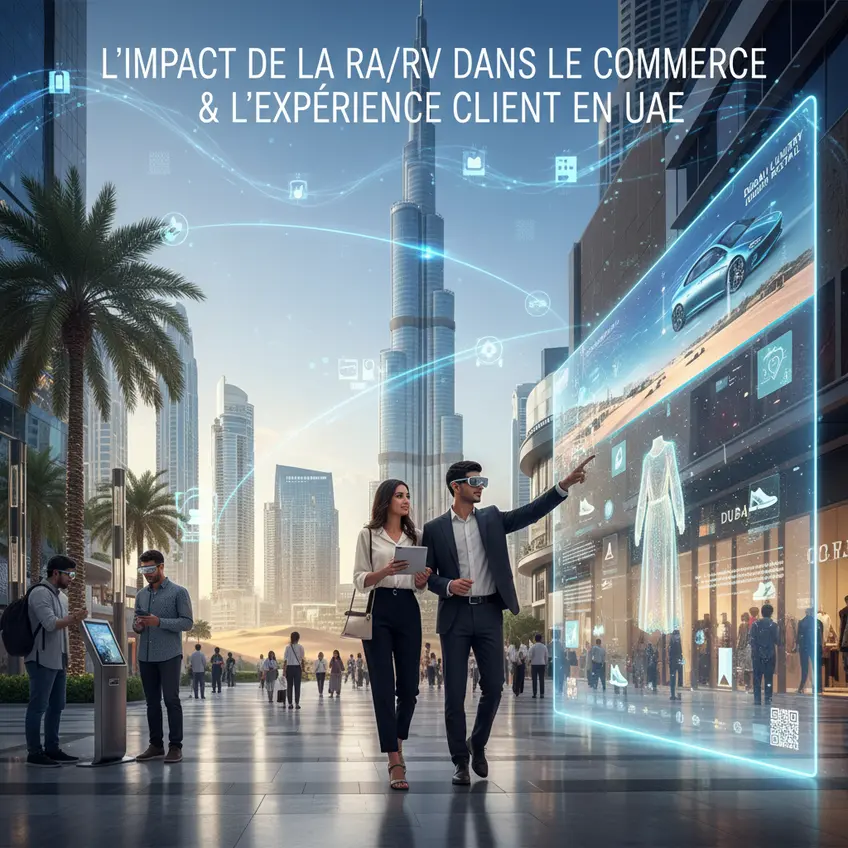
The UAE market, and Dubai in particular, is an incubator of innovation, and the retail sector is no exception. The adoption of Augmented Reality (AR) and Virtual Reality (VR) is not only growing there, but accelerating, driven by connected consumers and brands hungry for differentiation. Projections for 2024 and 2025 confirm this trend, with a significant increase in investment and deployment. According to several market research reports, the size of the AR and VR market in the Middle East and Africa (MENA) is expected to see an impressive compound annual growth rate (CAGR), with the UAE spearheading this expansion. This growth is fueled by a combination of factors: robust digital infrastructure, pro-technology government initiatives, and a young, tech-savvy demographic. Retailers in the UAE recognize the potential of these technologies to solve major challenges, such as online customer engagement, reducing product returns, and creating unique shopping experiences that capture attention in a highly competitive landscape. The emergence of metaverses and virtual worlds also promises new opportunities for brands in the UAE to create persistent, immersive digital presences, where consumers can not only interact with products, but also attend brand events, socialize, and engage in an entirely new way. This represents a significant evolution beyond simple AR applications, toward fuller, more community-oriented VR experiences. For example, major fashion and luxury brands in the UAE are already exploring the creation of "twin boutiques" in the metaverse, offering exclusive digital collections or advanced personalization experiences that complement their physical offerings. Demand for website creation in Dubai incorporating these immersive technologies is growing rapidly, reflecting this momentum. The role of a website creation agency in Dubai & UAE is therefore becoming crucial for supporting these transformations.
The Rise of Virtual Try-Ons and Immersive Showrooms in the UAE: Redefining the Shopping Experience
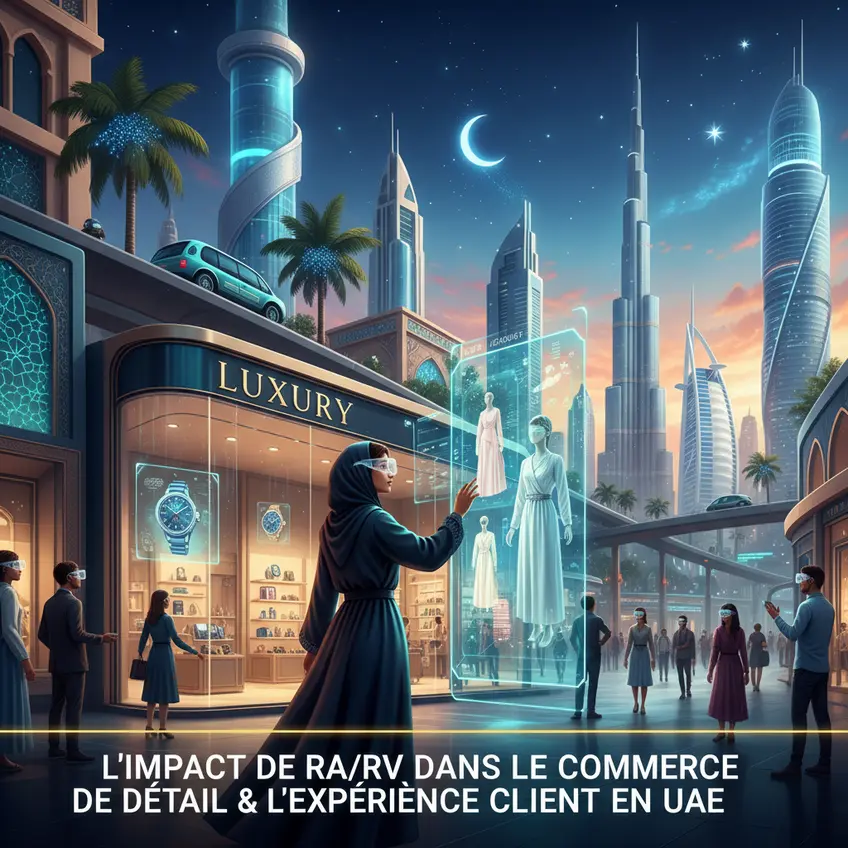
One of the most visible and impactful applications of AR and VR in UAE retail is undoubtedly virtual try-ons and immersive showrooms. These solutions let consumers realistically visualize products before purchase, thereby solving a major problem in online shopping: the inability to touch, feel, or try. Thanks to AR, customers can "try on" clothing, glasses, makeup, or even jewelry directly on their body via their smartphone or tablet camera. This technology offers precise, real-time visualization, often with advanced facial or body detection, letting them appreciate the fit, color, and style of the product. In the UAE, where fashion and luxury are dominant industries, this ability to offer an at-home try-on experience is a major competitive asset. For furniture and interior decor, AR lets users virtually place sofas, tables, or artwork in their own home, checking dimensions, aesthetics, and overall integration before making an investment. This feature drastically reduces product returns, which represent a significant cost for retailers. On the VR side, immersive showrooms go a step further by transporting the customer into an entirely virtual store environment. Brands can recreate their flagship stores in 3D, or design entirely imaginary spaces that reflect their brand identity. Customers can walk around, interact with products in 3D, read detailed descriptions, and even ask a virtual sales avatar for help. This approach is particularly powerful for luxury and automotive brands in the UAE, which seek to offer an exclusive, high-end experience. It also lets retailers reach customers beyond geographic borders, offering them a consistent, immersive brand experience, whether they're in Dubai, Abu Dhabi, or anywhere else in the world. These solutions don't just improve convenience; they enrich engagement, turn product discovery into an adventure, and strengthen the emotional connection between the consumer and the brand.
Hyper-Targeted Personalization and Increased Customer Engagement Thanks to AR/VR in the UAE: From Curiosity to Loyalty
Beyond simple product visualization, AR and VR are powerful catalysts for hyper-targeted personalization and unprecedented customer engagement in UAE retail. Data collected via AR/VR interactions (style preferences, chosen colors, virtually visualized products) can be used to refine product recommendations and marketing offers. Imagine an AR app that, after "scanning" a customer's clothing style, suggests complete outfits or complementary accessories, all customizable and viewable in real time. This ability to provide ultra-relevant, visually engaging recommendations far exceeds traditional recommendation algorithms based on purchase history. VR, meanwhile, lets brands create entirely personalized brand experiences, where the customer is the hero of their own story. A perfume brand in the UAE could, for example, offer a VR experience where the customer explores a virtual garden and creates their own bespoke fragrance, which they can then buy in the real world. This deep, emotional interaction forges a lasting connection with the brand. Engagement is also boosted by the playful, novel aspect of these technologies. AR games integrated into shopping apps, virtual in-store treasure hunts, or creative challenges using AR to design personalized products turn the act of purchasing into entertainment. These experiences generate not only traffic and interest, but also significant social sharing, as users are often inclined to share their creations or virtual try-ons on social media. For a web agency in Dubai, integrating these features is now a competitive advantage. This combination of personalization and gamification is particularly effective for younger generations (Gen Z and Millennials) in the UAE, who expect brands to offer innovative, interactive experiences. By turning passive shopping into an active, personalized adventure, AR and VR help UAE retailers move from a simple transaction to a deep, loyal customer relationship. These technologies aren't just sales tools, but platforms for storytelling and emotional bond-building that turn initial curiosity into unwavering brand loyalty.
In-Depth Comparison of AR and VR Solutions for Retail in the UAE: Choosing the Right Technology
The choice between Augmented Reality (AR) and Virtual Reality (VR) for a retail application in the UAE largely depends on the retailer's specific goals, the type of products or services offered, and the desired customer experience. While both technologies share the same goal of immersing the user, their approaches and technical requirements differ considerably, influencing their relevance to various retail strategies. AR, by its overlaid nature, is generally more accessible and less demanding in terms of equipment for the end consumer. It relies mainly on smartphones and tablets, devices already widely available among the UAE population. This makes it ideal for large-scale applications, targeting a broad audience and requiring smooth integration into consumers' daily lives. Typical use cases include virtual clothing or makeup try-ons, visualizing furniture in one's own environment, or enriching in-store product information via a simple mobile app. Ease of access and the relatively low technological barrier to entry for the consumer are major assets of AR, letting brands quickly deploy innovative marketing campaigns or purchase-assistance tools. However, AR, in its current form, is limited by the device's screen size and can't offer full immersion. The user remains aware of their real environment, and the experience can sometimes be interrupted by external factors. For retailers in the UAE, this means AR is excellent for one-off interactions and decision support, but less suited to extended narrative experiences or the creation of fully immersive brand worlds.
VR, on the other hand, offers complete, unprecedented immersion, but requires dedicated equipment in the form of a VR headset. This equipment, while increasingly affordable, represents an additional cost and logistical burden for the user, which limits its large-scale deployment for at-home consumer applications. However, VR's power lies in its ability to transport the user into an entirely new world, offering unmatched freedom of exploration and interaction. It's ideal for creating high-end brand experiences, luxury virtual showrooms, immersive property tours, or complex product simulations. For the automotive, real estate, or luxury sectors in the UAE, VR is a powerful tool for presenting products and services in an exceptional way, letting customers "live" the experience before purchase. It can also be used for internal sales staff training, simulating complex customer scenarios and improving team preparedness. Investment in VR is greater, both for the retailer (high-fidelity content development, headsets) and for the potential consumer (acquiring a headset). However, the return on investment can be significant in terms of customer engagement, brand recall, and the quality of the experience offered. Mobile app development in Dubai with VR features is increasingly in demand. The choice between AR and VR shouldn't be seen as an opposition, but as complementary. Many retailers in the UAE adopt a hybrid approach, using AR for everyday interactions and mass engagement, and VR for premium, targeted experiences, often available in physical stores or at special events. For example, a jewelry brand might offer an AR app for at-home virtual ring try-ons, while offering an immersive VR experience in-store, letting customers explore the brand's history and manufacturing process interactively. Collaborating with a web agency in Dubai & UAE is essential for making the right technological choice.
Detailed Comparison Table of Dominant AR/VR Platforms for UAE Retailers
Practical Guide to Successfully Integrating AR/VR Into Your Retail Strategy in the UAE: Key Steps for Innovation
Integrating Augmented Reality (AR) and Virtual Reality (VR) into a retail strategy in the UAE isn't a simple technology adoption, but a strategic transformation requiring careful planning and precise execution. To succeed, retailers must follow a structured process, from defining goals to continuous optimization. A fragmented or opportunistic approach risks failing to produce the expected results and wasting valuable resources. The ultimate goal is to create tangible value for the customer and for the business, by leveraging the unique capabilities of these immersive technologies. This involves not just choosing the right technology, but also understanding how it fits into the overall customer journey, how it complements existing sales channels, and how it strengthens brand identity in a market as dynamic and competitive as the UAE's. The key to success lies in the ability to innovate while staying grounded in the needs and expectations of the local and international consumers who make up UAE retailers' clientele. A strategic partnership with a digital marketing consultant in Dubai can prove decisive at this stage. Successful companies are those that see AR/VR not as an end in itself, but as a powerful means of improving the customer experience and achieving clear business goals. The UAE market, with its propensity for rapid technology adoption and its favorable business environment, offers ideal ground for experimenting with and deploying AR/VR solutions. Retailers who invest thoughtfully and strategically in these technologies will position themselves as innovation leaders and capture a growing share of the market.
Step 1: Define the Vision and Strategic Goals Specific to the UAE
The first and most crucial step is to clearly define the vision and strategic goals that AR/VR is meant to serve. It's not about adopting AR/VR simply because it's "trendy," but because these technologies can solve a specific problem or create a new value opportunity for the retailer in the UAE. Key questions to ask: What current challenges could AR/VR address (e.g. high return rates, low online engagement, lack of in-store differentiation)? What are the measurable goals (e.g. increase conversions by X%, reduce returns by Y%, improve customer satisfaction by Z%)? How do these technologies align with the brand's overall strategy and its positioning in the UAE market? Should the focus be on improving the online shopping experience, in-store, or both? The vision must be clear and shared by all stakeholders, from management to sales teams. It's also essential to take into account the specifics of the UAE market, such as cultural preferences, purchasing power, and consumer technological maturity. A "one-size-fits-all" approach won't work; the AR/VR experience must be designed to resonate with the UAE's local and international audience. For example, a luxury brand in Dubai might aim to create an exclusive VR experience for its VIP customers, while a supermarket chain might use AR to improve in-store navigation and product discovery. This initial step is the foundation on which all subsequent decisions will be based, and neglecting it can lead to ineffective, costly deployments.
Step 2: Select the Technologies and Partners Suited to the UAE Market
Once goals are defined, the next step is to select the technologies (AR or VR, or a combination of both) and partners (developers, 3D content providers, agencies) that can bring this vision to life. This requires a thorough understanding of each technology's capabilities and constraints. For AR, you'll need to choose between dedicated mobile apps, web integrations (WebAR) that don't require a download, or third-party platforms like Snapchat or Instagram for AR filters. For VR, the choice will involve the type of headset (standalone, PC-tethered, console-tethered) and the deployment platform (SteamVR, Oculus Store, or a proprietary solution). It's crucial to choose partners with proven experience in AR/VR development, ideally with knowledge of the UAE market. A website creation agency in Dubai & UAE specializing in these technologies can bring valuable expertise. The quality of 3D models, performance optimization, and user interface ergonomics are decisive factors for success. Integration with the retailer's existing systems, such as e-commerce, inventory management, and CRM, must also be considered. Partnering with a mobile app development in Dubai specialist can be essential for mobile AR solutions. Local expertise can be a major asset, as it helps ensure the solutions are not just technically viable, but also culturally appropriate and aligned with the expectations of UAE consumers. Negotiating contracts and defining clear deliverables with partners are also crucial aspects of this stage to avoid disappointment.
Step 3: Phased Deployment and Continuous Optimization of the User Experience in the UAE
The deployment of AR/VR solutions should ideally be phased, starting with small-scale pilot projects to test hypotheses and gather feedback. This iterative approach lets you identify and fix problems before a wider rollout. Collecting data on usage, engagement, and conversions is essential for measuring success and optimizing the experience. Key metrics can include time spent in the AR/VR app, feature usage rate, impact on sales, reduction in returns, and customer satisfaction. Feedback from users in the UAE should be actively sought and analyzed to refine the experience. This may involve adjustments to the user interface, improvements to 3D models, or the addition of new features. Continuous optimization is an endless process, as consumer expectations and technology are constantly evolving. Staff training is also an essential component, particularly for in-store VR experiences requiring assistance. Sales teams must be trained not only in using the technology, but also in how to incorporate it into the sales process to improve the customer experience. Finally, communication around the launch and improvements is paramount for generating interest and adoption among consumers in the UAE. A well-designed website in Dubai for showcasing these innovations is essential. Digital marketing campaigns should highlight the benefits of AR/VR and encourage experimentation. The goal is to create a virtuous cycle of improvement, where each iteration makes the AR/VR experience more effective, more engaging, and more valuable for the customer and the retailer.
Debunking Myths and Avoiding Common Pitfalls of AR/VR in UAE Retail
Despite the revolutionary potential of Augmented Reality (AR) and Virtual Reality (VR) for retail in the UAE, their implementation is often fraught with pitfalls and misunderstandings. It's crucial for retailers to debunk certain stubborn myths and be aware of common mistakes to ensure the success of their immersive initiatives. Enthusiasm for these technologies can sometimes eclipse the reality of the technical, financial, and operational challenges. Navigating this rapidly evolving ecosystem requires a pragmatic approach and a clear understanding of the limits and opportunities. One of the most widespread myths is that AR/VR is a "magic" solution that will solve all sales or customer engagement problems. In reality, these are just tools, powerful ones for sure, but whose effectiveness depends entirely on the underlying strategy and the quality of their implementation. A poor AR/VR experience can not only be ineffective, but also damage brand image and disappoint customers. For example, a slow, buggy AR app offering poor-quality 3D models will do more harm than good. Likewise, thinking that AR/VR entirely replaces human contact or the in-store physical experience is a mistake. On the contrary, the most successful applications are those that complement and enhance existing interactions, whether online or offline. The goal isn't to create an isolated experience, but to integrate it seamlessly into an omnichannel customer journey. Retailers in the UAE must also be wary of the race to innovate for innovation's sake, without a clear business objective. Every investment in AR/VR must be justified by potential return on investment, whether financial (increased sales, reduced returns) or strategic (improved brand awareness, customer loyalty). Without measurable goals, it's hard to assess success and optimize efforts. Finally, it's essential not to underestimate the need for technical and creative expertise to develop high-quality AR/VR experiences. Website development in Dubai must be carried out by professionals. Working with inexperienced partners can lead to delays, budget overruns, and disappointing results. The UAE market is full of talented companies, but rigorous selection is a must.
Common Mistake 1: Underestimating the Importance of User Experience and Ergonomics in the UAE
One of the most common mistakes is focusing solely on the technological aspect of AR/VR without paying enough attention to user experience (UX) and ergonomics. An immersive technology, even the most advanced, will fail if it isn't intuitive, easy to use, and enjoyable for the consumer. This is especially true in the UAE, where consumers are used to smooth, high-quality digital services. AR apps must be lightweight, quick to load, and offer stable environment detection. 3D models must be precise, realistic, and well optimized so as not to overload the user's device. The interface must be simple and clearly guide the customer through the different features. For VR, headset comfort, ease of navigation within the virtual environment, and minimizing motion sickness are paramount. Ignoring these aspects can lead to user frustration, a low adoption rate, and a negative perception of the brand. A poor user experience can quickly turn a potential innovation into a resounding failure. Thorough user testing with representative samples of the UAE clientele is essential for identifying and fixing weak points before a large-scale rollout. It's crucial to ensure the experience isn't just functional, but genuinely enjoyable and useful for the end consumer, making them want to come back and interact with the brand again via AR/VR.
Common Mistake 2: Ignoring Cultural Specifics and Consumer Preferences in the UAE
The UAE market is multicultural and diverse, with specific preferences and sensitivities that must be taken into account when designing AR/VR experiences. Ignoring these cultural nuances is a mistake that can alienate part of the clientele and undermine the effectiveness of immersive solutions. For example, the visuals, scenarios, and even music used in a VR experience must be appropriate and respectful of local cultural norms. Colors, symbols, and interactions must be chosen carefully to resonate positively with UAE consumers. Personalizing content for different nationalities or demographic groups within the UAE can also improve engagement. It's also important to consider language preferences; while English is widely spoken, Arabic remains a key language, and offering multilingual options can considerably broaden the reach and inclusiveness of the experience. Expectations around customer service and brand interactions can also vary, and AR/VR must be adapted to meet these specific expectations. Thorough market research and consultation with local experts are essential to ensure AR/VR experiences are not just technically brilliant, but also culturally smart and relevant to the target audience in the UAE. Successful personal branding in Dubai & UAE requires a fine understanding of these specifics.
Common Mistake 3: Neglecting Multichannel Integration and Synergy With Existing Systems in the UAE
Another common mistake is designing AR/VR as a standalone initiative, disconnected from the retailer's other sales channels and existing systems. To maximize their impact, AR/VR solutions must be seamlessly integrated into a coherent omnichannel strategy. This means the AR/VR experience must complement and enrich online and in-store interactions, rather than replacing them. For example, a customer using an AR app to visualize a product at home should be able to easily add it to their cart on the e-commerce site, or check its availability at a nearby physical store. Data collected via AR/VR must feed the retailer's CRM to enable deeper personalization and targeted marketing campaigns. A web agency in Dubai can help orchestrate this integration. Integration with inventory management systems is also crucial to ensure that virtually visualized products are actually available for purchase. Neglecting this synergy can create friction for the customer, disrupt the shopping journey, and make the AR/VR experience less useful. The goal is to create a digital ecosystem where AR/VR acts as a bridge between the physical and digital, offering a smooth, consistent experience across every touchpoint with the brand in the UAE. This requires thorough technical planning and close collaboration between AR/VR development teams, e-commerce teams, and operational teams. It's successful integration that will turn a technological innovation into a lasting business advantage.
Advanced Strategies and Best Practices for Maximizing the Impact of AR/VR in the UAE
For retailers in the UAE looking to get the most out of their investment in Augmented Reality (AR) and Virtual Reality (VR), it's essential to go beyond basic implementations and adopt advanced strategies and proven best practices. The UAE market is competitive, and standing out requires constant innovation and high-quality execution. These strategies aim to deepen customer engagement, optimize internal processes, and position the brand as a technology leader. One approach is to not limit yourself to obvious applications like virtual try-ons, but to explore more creative, unexpected uses that can truly surprise and delight customers. For example, AR can be used for experiential marketing campaigns in shopping malls, turning physical spaces into interactive playgrounds for the brand. VR can be deployed for exclusive product launches, where VIP customers are invited to global virtual events before the general public. Another key strategy is integrating artificial intelligence (AI) with AR/VR. AI can personalize the immersive experience in real time, adapting the displayed content based on the user's facial expressions, tone of voice, or eye movements. This creates more natural, responsive interactions, making the experience even more relevant and engaging. For example, an AI-powered virtual style assistant in AR could not only suggest clothing, but also give personalized advice based on the customer's personal style and the latest fashion trends in the UAE. Luxury brands' website in Dubai often incorporates these sophisticated features. Additionally, retailers should consider creating user-generated content (UGC) via AR/VR. Encouraging customers to create and share their own AR experiences (for example, by designing their own virtual product or sharing a selfie with a brand's AR filter) can organically amplify marketing reach and build a strong brand community. VR design contests or AR creation challenges can boost engagement and generate authentic, viral content. Finally, adopting a "gamification" approach can make the AR/VR experience even more addictive and memorable. Virtual rewards, collectible badges, or interaction-based leaderboards can encourage customers to spend more time with the brand and return regularly. These advanced strategies, when well executed, turn AR/VR from a simple tool into a genuine lever for growth and loyalty for retailers in the UAE.
Dynamic Personalization and Innovative Usage Scenarios in the UAE
Dynamic personalization is at the heart of advanced AR/VR strategies. Rather than offering a static experience, retailers can use real-time data to adapt immersive content to each customer's individual preferences. This goes beyond product recommendations based on purchase history; it's about modifying the virtual environment, avatars, product customization options, or even interactive scenarios based on the user's profile. In the UAE, where the diversity of nationalities and tastes is immense, this ability to adapt in real time is a major competitive advantage. Imagine a customer entering a VR car showroom in the UAE, where the default color, interior options, and even the virtual landscape are automatically adjusted based on their known or inferred preferences. Innovative usage scenarios also include collaborative AR, where multiple users can simultaneously interact with the same virtual object, each from their own device. This opens up possibilities for social shopping, virtual consultations with a salesperson or interior designer, or group experiences. A family in the UAE could, for example, design and visualize the layout of their future home together in AR, each contributing ideas in real time. These collaborative experiences enrich not just the purchase act, but also the customer relationship, turning shopping into a social, interactive activity. For personal branding in Dubai & UAE, these approaches strengthen the image of a modern, customer-centric brand.
Measuring ROI and Analyzing Customer Engagement in AR/VR Environments in the UAE
Measuring the return on investment (ROI) of AR/VR initiatives is crucial for justifying investment and optimizing future strategies. Beyond direct sales metrics, it's important to analyze customer engagement indicators specific to immersive experiences. For AR, this includes the number of app launches, time spent per session, the number of products visualized, the AR content-sharing rate on social media, and the impact on conversion and return rates. For VR, metrics can include time spent in the virtual showroom, the number of product interactions, navigation paths, and post-experience satisfaction surveys. Retailers in the UAE should also track the impact of AR/VR on brand awareness, perception of innovation, and customer loyalty. Advanced analytics tools can provide valuable insight into user behavior in immersive environments, helping identify areas for improvement and further personalize the experience. Integrating this data with existing CRM systems allows a 360-degree view of the customer, enriching customer profiles and enabling more targeted marketing actions. Rigorous analysis and informed interpretation of this data are essential for demonstrating the value of AR/VR and guiding the evolution of immersive strategies in UAE retail.
Concrete Case Studies: AR/VR in Action in UAE Retail
The UAE is fertile ground for experimenting with and deploying cutting-edge technology in retail, and several local and international brands have already successfully implemented AR/VR solutions there. These case studies illustrate the diversity of applications and the tangible impact these technologies can have on the customer experience and business results. These concrete examples show that AR and VR aren't mere futuristic concepts, but operational realities transforming the retail sector in the UAE. They serve as inspiration and a roadmap for other retailers eager to embrace immersive innovation and create differentiated customer experiences. The success of these initiatives often rests on a combination of factors: a clear strategic vision, quality technical execution, a thorough understanding of local consumer needs, and a commitment to continuous innovation. Case studies in the fashion, furniture, automotive, and luxury sectors are particularly telling, as these industries have high requirements for product visualization and customer experience. The ability of these technologies to bridge the gap between the customer's desire for tangibility and the convenience of online purchasing is a key factor in their success in the UAE. Additionally, the dynamic business environment and government support for innovation create an ecosystem conducive to the rapid adoption and maturation of these technologies. These companies' website in Dubai often proudly showcases these innovations. Web agencies in Dubai & UAE play a crucial role in developing these solutions.
A striking example is that of a major furniture retail chain in the UAE that launched an AR app letting customers visualize sofas, tables, and other furniture items directly in their own living room. Using their smartphone camera, customers could place realistic 3D models of products in their interior, checking dimensions, colors, and aesthetic fit before making a purchase. This initiative not only generated considerable buzz, but also led to a significant reduction in product returns, as customers had a better idea of what they were buying. The conversion rate for products visualized in AR also increased, demonstrating the direct impact of the technology on sales. Another notable case study involves a luxury cosmetics brand that introduced a virtual makeup try-on feature via a mobile AR app. Customers could "try" different shades of lipstick, eyeshadow, and foundation in real time, directly on their face. This immersive experience not only boosted customer engagement, but also let customers make more informed, confident purchasing decisions, reducing the hesitation often associated with buying makeup online. This solution was particularly well received by a tech-savvy female clientele in the UAE. In the luxury automotive sector, a high-end dealership in Dubai set up a VR showroom where customers could virtually configure and explore the interiors and exteriors of high-end vehicles. This let customers personalize their dream car with a multitude of options and visualize the result in immersive 3D, without the constraints of a physical showroom. The VR experience created a sense of exclusivity and strengthened the dealership's innovative brand image, attracting an affluent, tech-savvy clientele. These examples demonstrate that AR and VR aren't mere "nice-to-haves," but strategic tools that can transform business performance and customer engagement in UAE retail.
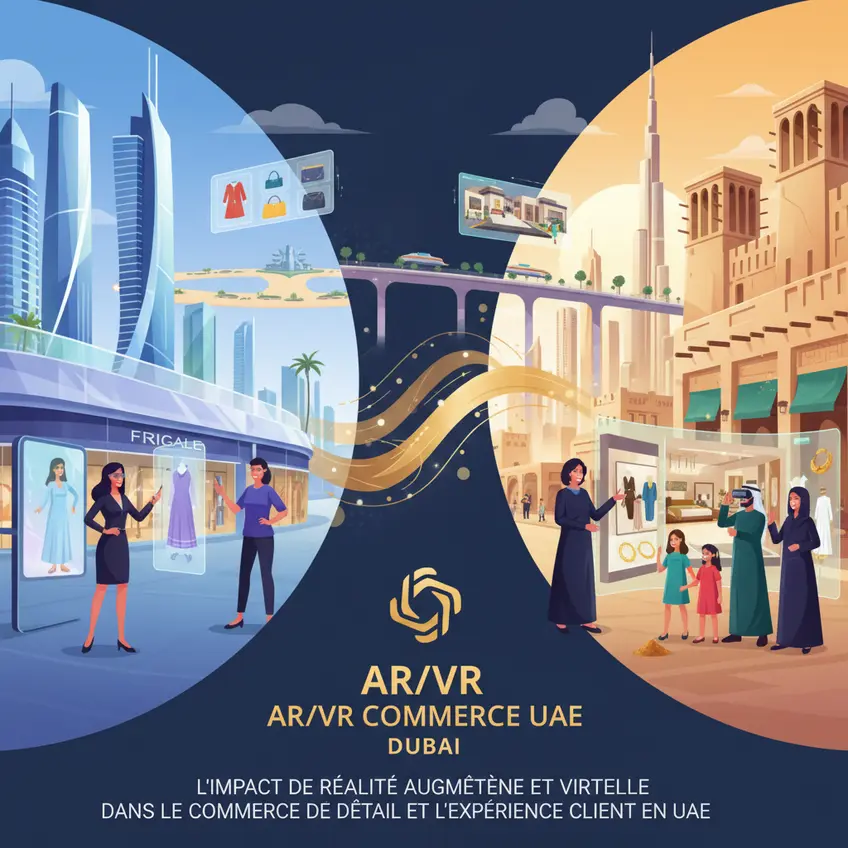
The Next Wave of Innovation: The Captivating Future of AR/VR in UAE Retail
The future of Augmented Reality (AR) and Virtual Reality (VR) in UAE retail looks even more captivating and transformative. Technological advances continue at breakneck speed, promising ever more immersive, personalized, integrated experiences. The next wave of innovation won't be limited to incremental improvements, but to breakthroughs that will redefine how we perceive and interact with commerce. One of the most significant developments will be the widespread adoption of lightweight, stylish AR glasses. Unlike bulky VR headsets or limited smartphones, these glasses will allow the overlay of information and virtual experiences directly in our field of vision, seamlessly and continuously. Imagine walking through a shopping mall in the UAE, and seeing personalized offers, product information, or directions displayed in AR directly on store windows, without having to take out your phone. This seamless fusion of digital and physical, known as "Mixed Reality" (MR), is the holy grail of spatial computing and promises to make AR ubiquitous and indispensable in consumers' daily lives. Mobile app development in Dubai will need to adapt to these new devices.
The metaverse, while still in its infancy, also represents a major component of this next wave. Persistent virtual worlds where consumers can socialize, work, play, and of course, shop, will become increasingly sophisticated. Brands in the UAE will invest in creating their own "plots" in the metaverse, offering exclusive brand experiences, virtual product launches, and the ability to buy digital goods (NFTs) or physical equivalents delivered to their door. The synergy between digital avatars and the ability to personalize one's virtual identity will open up new avenues for digital fashion and personalized retail. The integration of artificial intelligence (AI) and machine learning will also deepen. AI will not only enable dynamic personalization of AR/VR experiences based on user behavior, but also the creation of hyper-realistic, conversational virtual shopping assistants. These smart avatars will be able to guide customers through virtual showrooms, answer their questions, and even anticipate their needs, offering an unprecedented level of customer service. Haptic technology, which simulates touch and feel, will also make significant progress, letting customers "feel" the texture of a fabric or the weight of a virtual object. This will further narrow the gap between the virtual and physical experience, making online purchases even more confident and satisfying. Finally, the widespread adoption of 5G and 6G networks in the UAE is essential for supporting the bandwidth and latency needed for next-generation AR/VR experiences. The speed and reliability of connectivity will enable seamless cloud-based AR applications and smooth, responsive VR worlds. The role of website creation in Dubai is crucial for integrating these technologies. The future of AR/VR in UAE retail isn't just about improving technology, but about creating a new commercial ecosystem where the boundaries between real and virtual blur, offering consumers unprecedented shopping experiences and brands unlimited opportunities for innovation and growth.
Detailed Frequently Asked Questions (FAQ) on AR/VR and Retail in the UAE
What is the main benefit of AR/VR for retail in the UAE?
The main benefit is the ability to create immersive, engaging customer experiences that surpass the limits of traditional e-commerce and physical retail. This leads to better product understanding, fewer returns, and higher conversions, strengthening brand loyalty in a competitive market.
Is AR or VR better suited for small retail businesses in the UAE?
For small businesses, smartphone-based AR is often more accessible. It doesn't require specialized equipment for the customer and can be integrated more easily into an existing website in Dubai or app, offering excellent cost-effectiveness for initial customer engagement.
How can AR/VR reduce product returns in the UAE?
AR/VR lets customers visualize products more realistically and accurately (virtual try-on, placement in the environment). This better pre-purchase appreciation reduces the risk of dissatisfaction related to size, color, or aesthetic fit, thereby minimizing returns.
Which retail sectors in the UAE benefit most from AR/VR?
Sectors like furniture, fashion, beauty, automotive, real estate, and luxury benefit enormously. They involve products where visualization and experience are crucial to the purchase decision, and where AR/VR can offer significant added value.
Are UAE consumers ready for AR/VR in shopping?
Yes, consumers in the UAE, particularly the younger generation, are very open and tech-savvy. They're hungry for innovative experiences and are among the first to adopt new technology, making it an ideal market for AR/VR in retail.
What is the cost of implementing AR/VR for a retailer in the UAE?
The cost varies considerably depending on the complexity of the experience, the quality of the 3D models, and the choice of technology (mobile AR vs. high-fidelity VR). An AR pilot can be relatively affordable, while a full VR showroom represents a more substantial investment. Website development in Dubai with AR requires a budget.
Practical Checklist for Successfully Implementing AR/VR in Your Retail Business in the UAE
1. Define Clear, Measurable Goals:
Before any investment, establish specific goals (e.g. increase conversions, reduce returns, improve engagement). This will guide all decisions and let you assess the success of your AR/VR initiative, ensuring it aligns with your business strategy in the UAE.
2. Choose the Right Technology (AR or VR):
Assess whether AR (accessible via smartphone) or VR (full immersion with a headset) best fits your product, your target audience, and the type of experience you want to offer. A web agency in Dubai can advise you.
3. Ensure an Intuitive, Smooth User Experience:
Prioritize ease of use, technical stability, and comfort. An AR/VR experience must be enjoyable, free of bugs or latency, to maximize adoption and customer satisfaction in the UAE and avoid frustration.
4. Collaborate With Local and Technical Experts:
Work with AR/VR developers and agencies with proven expertise and an understanding of the UAE market. Their know-how will guarantee a quality implementation suited to the region's cultural and technical specifics.
5. Integrate AR/VR Into an Omnichannel Strategy:
Don't design AR/VR as a standalone solution. Make sure it integrates seamlessly with your existing sales channels (e-commerce, physical) and your systems (CRM, inventory) to offer a consistent customer journey in the UAE.
6. Plan Phased Deployment and Continuous Optimization:
Start with a pilot project, gather feedback, and optimize the experience. Analyzing usage data is crucial for continuous improvement, ensuring your AR/VR solution stays relevant and effective in the UAE.


