















































In a world where food security has become a major concern, particularly in regions facing extreme environmental constraints, the United Arab Emirates is positioning itself at the forefront of an agricultural revolution. The desert environment, traditionally hostile to large-scale food crops, is now the setting for spectacular innovation thanks to AgriTech. This convergence of agriculture and technology promises not only to transform the local agricultural landscape, but also to establish new paradigms for sustainable food production worldwide. Vertical farming and hydroponics, in particular, offer disruptive solutions for maximizing yields under arid conditions, minimizing the use of precious resources like water and arable land. They represent a path forward for nations eager to strengthen their food self-sufficiency and reduce their dependence on imports, a crucial issue for economic and social stability. This article dives deep into these technologies, exploring their foundations, current trends, best practices, and the prospects they open up for Dubai and the entire United Arab Emirates, an innovation hub where every project is backed by modern infrastructure and strong political will for economic diversification. Local businesses, mindful of their image and impact, understand the importance of a robust digital presence. That's why many entities are turning to a web agency in Dubai to build their visibility and promote their sustainable initiatives. Thoughtful development of their digital presence is essential to connect with the consumers and investors who share this vision of a greener, more resilient future.
Foundations of AgriTech in Arid Environments: Definitions, History, and Key Principles
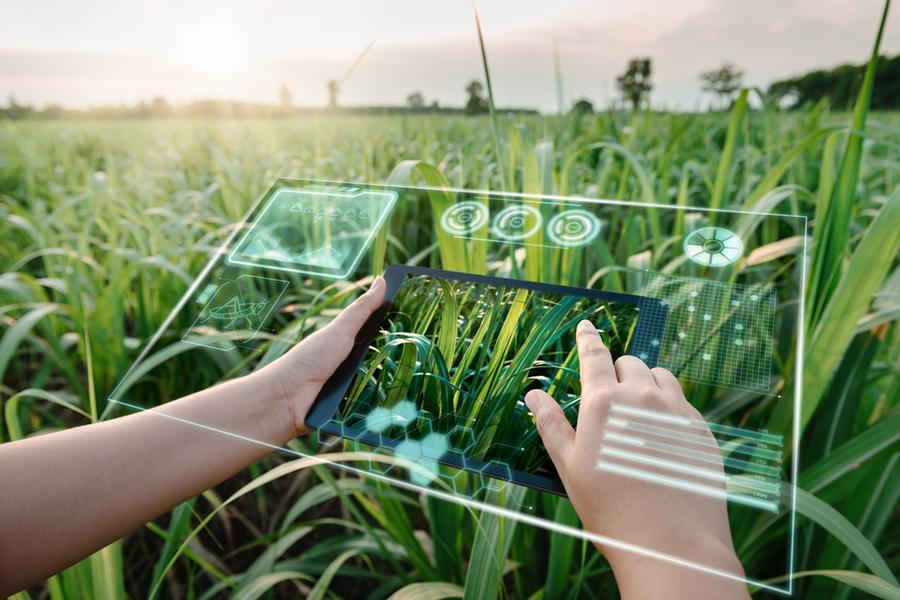
AgriTech encompasses all the technological innovations aimed at improving the efficiency and sustainability of agriculture. In arid environments, its role is essential given major constraints such as water scarcity, extreme temperatures, and poor soil quality. Two pillars dominate this transformation: vertical farming and hydroponics.
While these practices have ancient origins, their combination with modern technology — smart sensors, artificial intelligence, LED lighting and automation — has achieved unprecedented levels of productivity and sustainability. Precise control of light, temperature, humidity, CO₂, and nutrients guarantees optimal growing conditions while limiting inputs and pesticide use.
In the United Arab Emirates, the development of AgriTech is backed by strong political will to strengthen food security and diversify the economy. Strategic investment, technology partnerships, and website development in Dubai initiatives help showcase these innovative projects on the international stage.
These systems enable year-round local production, favor short supply chains, reduce carbon footprint, and fit into a circular-economy logic through smart water resource management. AgriTech in a desert environment thus goes beyond mere technical innovation: it embodies a sustainable vision for the agriculture of the future.
Current Trends & Recent Statistics (2024/2025) of Desert AgriTech
The AgriTech sector in the Middle East, and particularly in the United Arab Emirates, is experiencing strong growth thanks to massive investment and the drive to strengthen local food security. For 2024-2025, the adoption of vertical farming and hydroponics is accelerating in order to address the challenges of an arid climate, water scarcity, and growing demand for sustainable local products.
The UAE is actively investing in research and development, artificial intelligence (AI), machine learning, and solar energy to optimize agricultural yields and reduce costs. The digitalization of agriculture is also driving the creation of digital platforms and website in Dubai projects dedicated to showcasing innovation, fostering collaboration, and enabling smart agricultural commerce.
This momentum is driving the rise of AgriTech startups, smart vertical and hydroponic farms, and international partnerships, positioning Dubai as a hub for desert agricultural innovation. AgriTech is thus becoming a strategic lever for resilient, sustainable, local food production, integrated with smart cities and the United Arab Emirates' sustainable development goals.
The Rise of Urban Farms and Community Micro-Farms
Rapid urbanization and growing population density in Dubai and the other emirates have catalyzed the emergence of urban farms and community micro-farms. These initiatives, often integrated into existing buildings or on rooftops, use vertical farming and hydroponics techniques to grow leafy vegetables, herbs, and fruit on a small scale. They aim to bring production closer to consumers, reducing transport distances and the associated carbon footprint. These farms are also vectors for public education and awareness of sustainable agriculture. They turn unused spaces into dynamic food production centers. The technology is becoming increasingly accessible, letting entire communities take part in this green revolution. Local governments encourage these initiatives with grants and logistical support, recognizing their crucial role in improving local food security and promoting a healthy lifestyle. These farms also contribute to beautifying urban areas, offering green spaces and creating social bonds within neighborhoods. The creation of digital platforms for managing these farms and selling their products is also booming, facilitating interaction between producers and consumers.
The Integration of AI and IoT for Hyper-Optimized Precision Agriculture
The integration of artificial intelligence (AI) and the Internet of Things (IoT) is set to redefine precision agriculture in desert environments. Smart sensors collect real-time data on humidity, temperature, pH levels, nutrient concentration, and plant health. AI then analyzes these vast datasets to provide precise recommendations and optimize growing conditions. For example, AI can detect early signs of disease or nutritional deficiencies, enabling rapid, targeted interventions, thereby reducing waste and maximizing yields. Smart irrigation systems, controlled by IoT, automatically adjust the amount of water and nutrients supplied to each plant based on its specific needs. This hyper-optimization not only saves precious resources like water and energy, but also produces higher-quality crops more predictably and efficiently. Deploying these advanced systems requires specialized technical expertise, and many farms rely on specialized partners. Local companies looking to position themselves as leaders in this field are investing heavily in website creation in Dubai to showcase their innovative solutions and attract potential investors and customers. These web platforms are becoming essential showcases for demonstrating the effectiveness of their AgriTech technology and for sharing their successes with the world.
Comparing the Leading AgriTech Options for Desert Agriculture
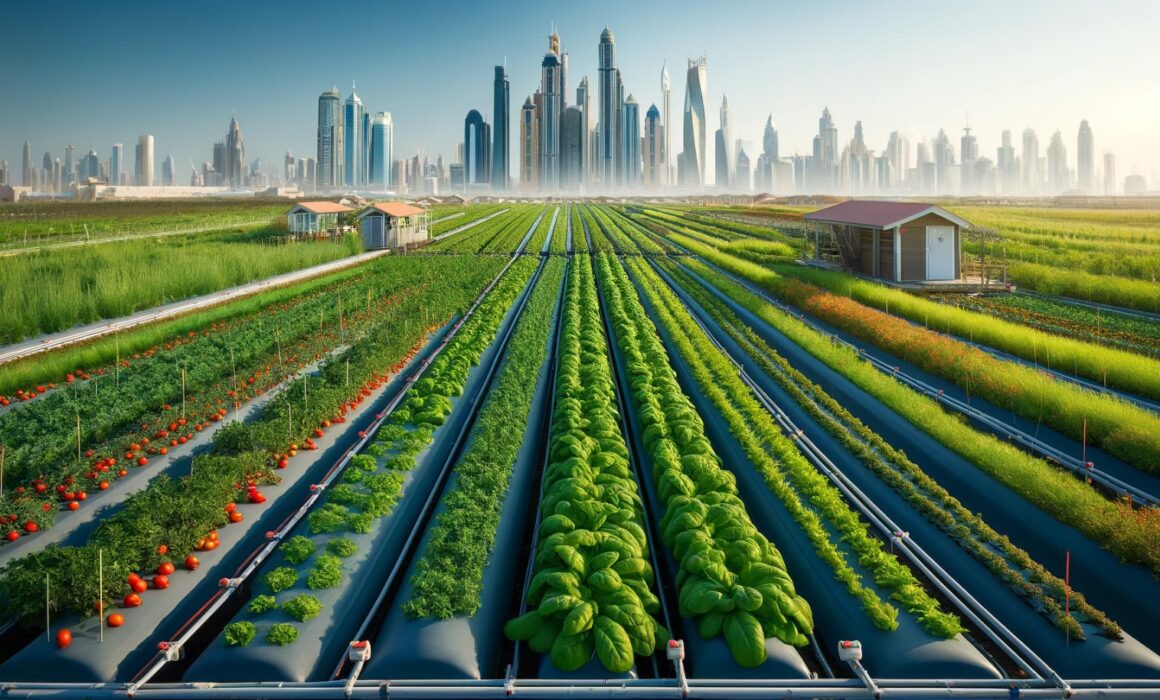
Faced with the challenges of agriculture in desert environments, several AgriTech solutions stand out for their effectiveness and adaptability, notably vertical farming and hydroponics, complemented by approaches such as aquaponics and aeroponics. The choice of technology depends on the type of crop, the scale of production, available resources, and strategic goals, making a rigorous comparative analysis essential before any investment in the United Arab Emirates. Thanks to advances in energy efficiency, innovative materials, and the development of integrated hybrid solutions, these systems are becoming increasingly economically viable, while institutional support and access to specialized technical expertise play a key role in the success and sustainability of AgriTech projects.
Detailed Comparison Table of Key AgriTech Technologies
Practical Guide to Implementing AgriTech Solutions in Desert Environments
Successfully implementing AgriTech projects in a desert environment requires meticulous planning and strategic execution. This practical guide breaks the process down into clear steps, letting entrepreneurs, investors, and policymakers in the United Arab Emirates navigate this innovative landscape effectively. Each phase is crucial for ensuring the technical, economic, and environmental viability of the project. It's essential to adopt a holistic approach, considering not just the technological aspects, but also human resources, regulatory frameworks, and local market dynamics. The importance of collaborating with local and international experts can't be overstated for overcoming the challenges specific to desert environments. A digital marketing consultant in Dubai can also play a key role in helping position these initiatives and reach the right targets, whether investors or consumers. Transparent communication about the benefits of these technologies is essential for building trust and gaining public buy-in.
Step 1: Feasibility Study and Technology Selection
Before any investment, a thorough feasibility study is essential. This includes site analysis (access to water, solar energy, logistics), assessing local market needs (which products are most in demand and imported), and a detailed cost-benefit analysis for each AgriTech technology under consideration (vertical farming, hydroponics, etc.). Technology selection must align with production goals, budget constraints, and the team's technical capabilities. It's crucial to assess water and energy consumption, carbon footprint, and the yield potential of each system. This step should also include identifying potential technology partners and suppliers, both locally and internationally, to ensure access to the best solutions available. Analyzing local regulations and government incentives is also essential at this stage to maximize benefits. This phase is the cornerstone of any AgriTech project, and any gap can have significant repercussions on the overall success of the initiative.
Step 2: Design, Engineering, and Infrastructure Setup
Once the technology has been chosen, the design and engineering phase takes over. This involves developing detailed plans for the vertical farm or hydroponic system, including crop layout, irrigation, ventilation, LED lighting systems, and automated environmental controls. Integrating renewable energy, particularly solar, should be a priority for reducing operating costs and environmental footprint. Infrastructure construction must meet the highest quality standards to guarantee the system's durability and efficiency in a demanding desert environment. Setting up IoT sensors and automation systems must be done by experts to ensure accurate data collection and optimal control. A preventive maintenance plan should be developed at this stage to anticipate potential malfunctions and ensure production continuity. The expertise of a website creation agency in Dubai & UAE can be invaluable for documenting this process and creating communication materials for stakeholders.
Step 3: Operational Management, Continuous Optimization, and Market Development
After commissioning, day-to-day operational management is essential. This includes crop monitoring, preparing nutrient solutions, managing pests and disease, and harvesting. Using AI-based farm management software makes it possible to continuously optimize growth parameters, analyze performance, and identify areas for improvement. Ongoing staff training is also crucial for mastering these advanced technologies and ensuring high-quality production. At the same time, market development is a priority. Establishing partnerships with retailers, restaurants, and local distributors is fundamental for marketing fresh products. Product marketing should highlight their local origin, freshness, sustainability, and superior quality. Personal branding in Dubai & UAE is also an asset for industry leaders looking to position themselves as pioneers of sustainable agriculture and inspire other initiatives. Gathering consumer feedback lets you adjust your offering and explore new growth opportunities. A web agency in Dubai & UAE can help create e-commerce platforms and communication strategies to reach a wider audience and diversify sales channels.
Common Mistakes and Myths to Debunk in Desert AgriTech
Enthusiasm for AgriTech in desert environments is palpable, but it's crucial to navigate carefully to avoid common pitfalls. Many mistakes and myths can hinder project success, from unrealistic expectations to misunderstandings about the technology itself. A clear understanding of the challenges and realities is essential for anyone looking to engage in this innovative field in the United Arab Emirates. Debunking these misconceptions not only helps make more informed decisions, but also maximizes the chances of long-term success. Education and the dissemination of accurate information are powerful tools for countering misinformation and encouraging a realistic approach to high-tech agriculture. It's also important to recognize that even the most advanced technology can't compensate for inadequate planning or poor management. Transparency about the challenges faced by AgriTech pioneers can also serve as valuable lessons for newcomers. Finally, constantly updating your knowledge is essential, as the AgriTech field evolves quickly, with new solutions and best practices constantly emerging.
Myth 1: AgriTech Will Solve All Agricultural Problems Effortlessly
It's a common mistake to believe that AgriTech is a miracle solution requiring no effort. While vertical farming and hydroponics offer considerable benefits, they require technical expertise, rigorous management, and significant upfront investment. Automation reduces physical workload, but it increases the complexity of system management, data analysis, and maintenance. Success depends on the ability to understand and master these technologies, anticipate problems, and adapt to the specific conditions of the desert environment. This isn't farming without farmers, but farming that requires different, more specialized skills. Investment in training and skills development is just as important as technological investment. Staff must be trained to use sophisticated systems, interpret sensor data, and make informed decisions to optimize production. Managing these systems requires constant technology monitoring and the ability to adapt to new innovations. Deploying mobile app development in Dubai to monitor and control these systems remotely is an emerging trend that requires specific skills.
Myth 2: AgriTech Is Always More Profitable Than Traditional Agriculture
While AgriTech can offer higher yields and more efficient resource use, upfront installation costs and operating costs (energy, skilled labor, maintenance) can be considerable. Profitability depends heavily on the project's scale, crop type, market access, and selling prices. In some cases, low-cost traditional agriculture may remain more profitable for certain products. It's essential to conduct a rigorous economic analysis and not underestimate hidden costs. Subsidies and government incentives in the United Arab Emirates can help offset some of the upfront investment, but long-term viability rests on a solid economic model. Diversifying crops and seeking high-value niche markets can also improve profitability. Financial management and cost optimization are crucial aspects for ensuring the sustainability of AgriTech projects. Investment in researching and developing more efficient, less costly technologies is also essential for making AgriTech more accessible and profitable in the future. A web agency in Dubai & UAE can help promote value-added products to a targeted clientele, thereby improving margins. Targeted marketing and building strong brands for AgriTech products can justify higher prices.
Best Practices & Advanced Strategies for AgriTech in Desert Environments
To maximize the chances of success for AgriTech projects in desert environments, adopting best practices and advanced strategies is paramount. These guidelines, drawn from the experience of pioneers and the latest scientific advances, aim to optimize the efficiency, sustainability, and profitability of AgriTech farms in the United Arab Emirates. The unique nature of the desert environment demands innovative approaches and constant adaptability. It's not enough to implement the technology; it must be managed with intelligence and vision. This involves constant technology monitoring, close collaboration with research and development, and the ability to integrate new solutions as they emerge. Advanced strategies go beyond simple technical optimization to encompass human resource management, partnership development, and building a strong brand. Long-term success will depend on the ability of players to innovate and adapt to rapid changes in the market and the environment. Promoting these initiatives requires clear communication and effective digital tools, an area where a web agency in Dubai can provide valuable support. Efforts to create strong AgriTech ecosystems, with links between startups, universities, and large companies, are essential for accelerating the innovation and deployment of these solutions.
Integrating Renewable Energy Solutions (Solar)
Integrating solar energy is a key strategy for AgriTech farms in desert environments, sharply reducing energy costs while strengthening environmental sustainability. In the United Arab Emirates, exceptional sunshine supports farms' energy self-sufficiency, powering LED lighting, irrigation, ventilation, and IoT sensors, with a fast return on investment thanks to long-term savings. Combined with battery storage, government incentives, and the development of smart microgrids, this approach limits dependence on conventional energy, supports carbon neutrality goals, and improves the resilience of AgriTech projects, while advances in heat-resistant solar panels further strengthen their efficiency in the desert.
Optimizing Water Use With Closed-Loop Systems
Since water is the most critical resource in desert environments, AgriTech farms are adopting closed-loop water systems capable of reducing consumption by 70% to 98% compared to traditional agriculture, particularly in hydroponics, aquaponics, and vertical farming. Through recycling, filtration, pH and nutrient control, and the use of smart sensors and drip irrigation, water is used with maximum efficiency. In the United Arab Emirates, solutions such as solar desalination, reuse of treated wastewater, condensate recovery, and innovation in anti-evaporation materials strengthen the sustainability and profitability of projects, while a digital marketing consultant in Dubai can showcase this commitment to water conservation, which has become a strategic asset with investors and responsible consumers.
Case Study: Vertical Farms in Dubai – A Model of Success in a Desert Environment
Dubai has established itself as a global laboratory for desert AgriTech, with landmark projects demonstrating the feasibility, profitability, and scalability of vertical and hydroponic farming. The case of Bustanica, the largest vertical farm in the world, perfectly illustrates this success: production of more than 1,000 tonnes of leafy greens per year, 95% water saved, renewable energy, full automation, and short supply chains to airlines and local markets, thereby strengthening the food security of the United Arab Emirates. Other farms, such as those specializing in microgreens and herbs, prove that viable economic models exist at different scales, driven by technological innovation, international partnerships, and strong government support, durably positioning Dubai as a global leader in desert AgriTech and a benchmark for arid regions.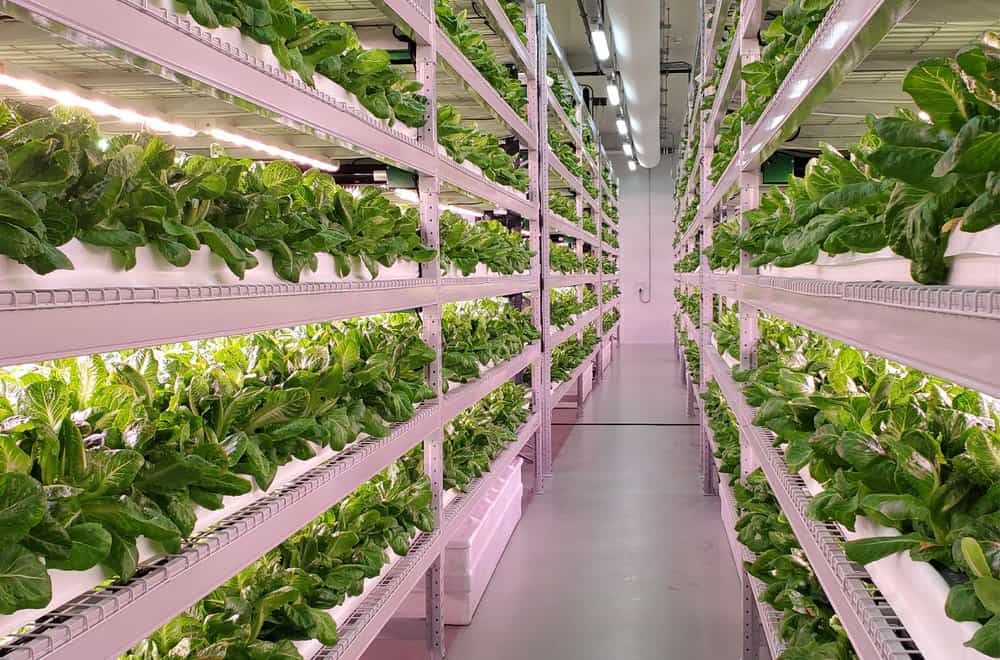
The Horizon of AgriTech: Innovation and Future Outlook in Desert Environments
AgriTech in desert environments in the United Arab Emirates is evolving rapidly thanks to innovation that's pushing the boundaries of sustainable food production, incorporating biotechnology, synthetic foods, agricultural robotics, and autonomous systems to create resilient ecosystems against climate change. Solutions such as vertical farms, hydroponics, aquaponics, blockchain for traceability, and farming-as-a-service make it possible to optimize water consumption, solar energy, IoT sensors, and smart nutrient management, while reducing dependence on human labor. AgriTech startups, backed by incubators, accelerators, and website development in Dubai, are harnessing these technologies to turn the desert into a thriving source of food, attract investment and talent, positioning the UAE as a global leader in the agriculture of the future and a model of sustainability and environmental resilience.
Frequently Asked Questions on Vertical Farming and Desert Hydroponics
What are the main advantages of vertical farming in a desert environment?
The main advantages include minimal water use (up to 95% savings), year-round production independent of climate, considerably higher yields per square meter, no pesticides, and reduced transport distances, guaranteeing fresher products and a smaller carbon footprint.
Is hydroponics really more eco-friendly than traditional agriculture in the desert?
Yes, hydroponics is significantly more eco-friendly. It uses far less water thanks to closed-loop systems, requires no arable soil, and reduces the use of chemicals, since the controlled environment minimizes pests and disease. It's a sustainable farming method for arid regions.
What is the upfront cost of a vertical or hydroponic AgriTech farm in Dubai?
The upfront cost can vary considerably depending on scale, level of automation, and technological sophistication. It can range from a few hundred thousand dirhams for a small setup to tens of millions for large commercial farms. Government subsidies can help offset this investment.
What types of crops can be efficiently produced with these methods?
These methods are particularly effective for leafy greens (lettuce, spinach), herbs, small fruit (strawberries), and certain vegetables (cherry tomatoes, cucumbers). Ongoing research is expanding the range of suitable crops, including root options like radishes or short carrots.
How do these farms handle extreme desert temperatures?
AgriTech farms in desert environments are generally set up in controlled environments (greenhouses, insulated warehouses) with advanced climate control systems, often powered by solar energy. Smart insulation and ventilation techniques are also used to maintain optimal temperatures for crops.
Are there job opportunities in AgriTech in Dubai?
Absolutely. The AgriTech sector in Dubai and the United Arab Emirates is booming, creating demand for agricultural engineers, automation technicians, horticulture experts, data scientists, and farm managers. Skills in technology and agriculture are highly sought after. A career built on personal branding in Dubai & UAE can help professionals stand out.
Essential Checklist for the Success of Your AgriTech Project in an Arid Zone
-
Thorough Assessment of the Site and Local Resources:
Analyze access to water (treatment, desalination), energy (solar potential), and proximity to markets to minimize logistics costs. A well-chosen site reduces operational challenges.
-
Suitable, Scalable Technology Selection:
Choose the systems (vertical, hydroponic, aquaponic) that match your crop and yield goals, taking into account their scalability and future integration with new technology.
-
A Solid Business Plan and Realistic Financial Projections:
Develop a detailed business plan including upfront costs, operating expenses, expected revenue, and a risk analysis to ensure the project's long-term economic viability.
-
Strategic Partnerships and Access to Expertise:
Collaborate with AgriTech experts, universities, research institutes, and technology partners to benefit from their know-how and the latest innovations.
-
An Effective Marketing and Distribution Strategy:
Identify your target markets (restaurants, supermarkets, direct consumers) and set up effective distribution channels to ensure the sale of your fresh products. Building a strong brand is essential.
-
Ongoing Training and Team Development:
Invest in training your staff on AgriTech technology, crop management, and data analysis to ensure efficient operations and constant adaptation to new methods.


