






































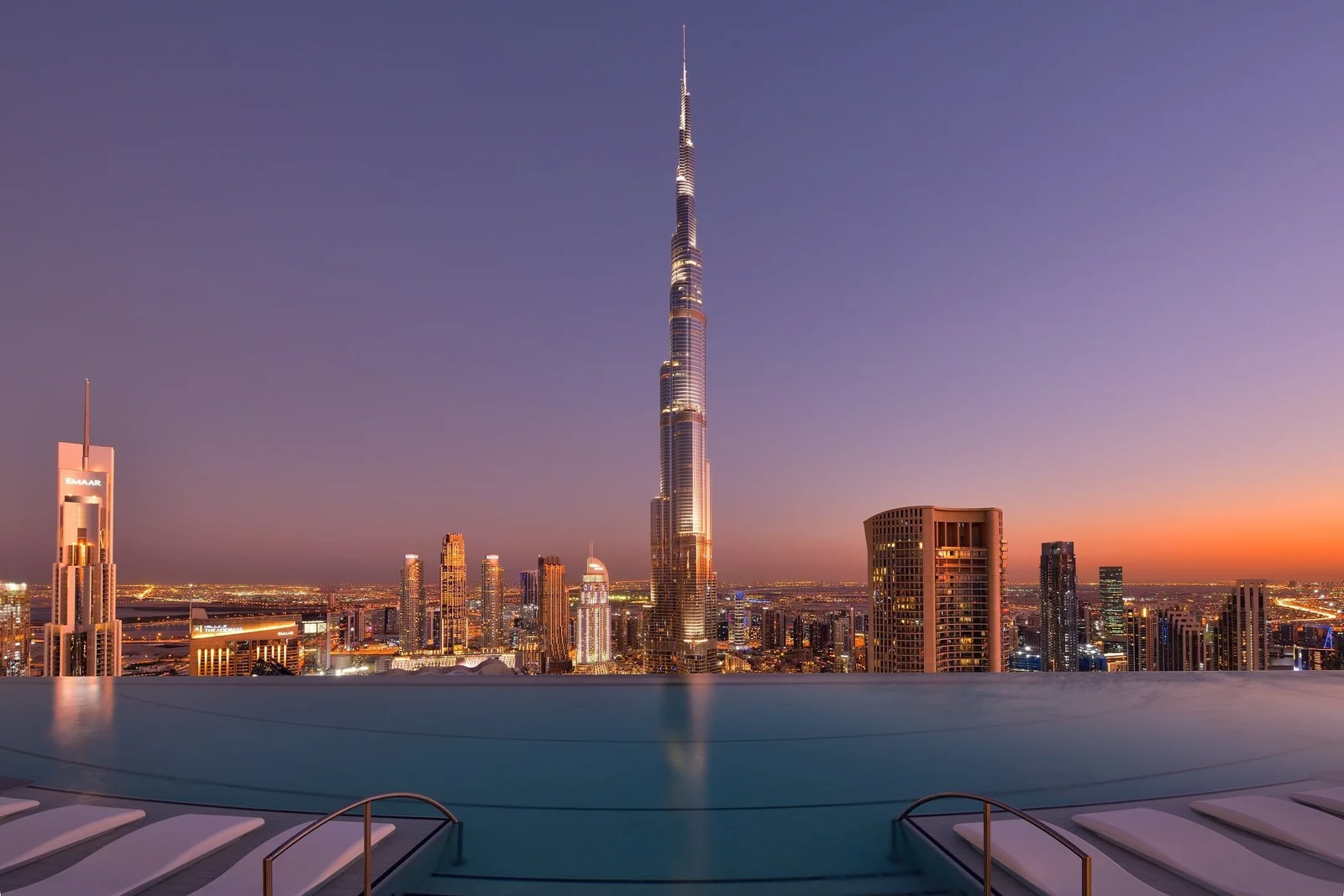










The Emirate of Dubai continues to redefine the boundaries of urban mobility. Following autonomous ground vehicles and hyperloop concepts, the horizon is now occupied by eVTOL (Electric Vertical Take-Off and Landing) aircraft – the famous autonomous flying taxis. Their integration is not just a technological matter; it is a complex challenge involving infrastructure, low-altitude airspace regulation (UAM - Urban Air Mobility), and public perception.
For technology companies, consulting firms, and digital agencies targeting this next-generation mobility market, mere existence is not enough. Their showcase, their Dubai website creation, must embody the reliability and futuristic vision demanded by the RTA (Roads and Transport Authority) and the GCAA (General Civil Aviation Authority).
This comprehensive guide, exceeding 5000 words, is designed to be the definitive resource on eVTOL integration in Dubai. We will dissect the necessary technical architectures for autonomous air traffic management, post-2025 certification requirements, and how a Website Creation Agency in Dubai & UAE can position itself as a credible technological partner in this race for the urban sky.
The Foundation: Decrypting Flying Taxis and Dubai's UAM Ecosystem
The era of flying taxis marks the third revolution in urban transport, following railways and automobiles. Dubai is the global testbed for this transformation, with ambitious integration goals.

Technical Definitions: eVTOL, UTM, and UAM
- eVTOL (Electric Vertical Take-Off and Landing): Electric aircraft capable of vertical takeoff and landing without a runway. The models targeted by Dubai are primarily autonomous or designed to be remotely piloted, eliminating the need for an onboard pilot in the long term.
- UAM (Urban Air Mobility): The overall concept of air transport for passengers and cargo in an urban environment, using small aircraft, including eVTOLs. This is the operational framework Dubai is building.
- UTM (Unmanned Traffic Management): The digital and automated system required to safely manage the traffic of autonomous drones and eVTOLs in low-altitude airspace (below 1200 feet), distinct from traditional commercial air traffic.
The success of UAM depends on a flawless UTM system. The interface platform for the UTM—the Dubai & UAE website—must be exceptionally reliable and high-performing, as it will manage thousands of simultaneous flight paths critical to public safety.
Dubai's Vision: The Leadership of the RTA
Dubai's commitment to eVTOLs is not just an experiment but a state mobility strategy led by the RTA. Key objectives include:
- Congestion Reduction: Offering a fast alternative to congested roads, especially between key areas (Downtown, Marina, Jumeirah).
- Sustainability: The use of electric propulsion aligns with Dubai's carbon neutrality strategy.
- Urban Competitiveness: Establishing Dubai as the world's most advanced city in future mobility, thereby attracting technological investment and talent.
The initial phases, post-2025, aim for the operation of piloted models before transitioning to full autonomy. This requires adaptive digital systems that only an web agency in Dubai specializing in critical systems can provide.
Infrastructure and Physical Integration Challenges
Integrating eVTOLs raises fundamental questions about modifying the urban landscape and achieving multimodal interconnection.
Vertiports: The Physical Link of UAM
A vertiport is the equivalent of an airport for eVTOLs. Their design and location are crucial.
The website development and mobile applications must serve as the gateway between these physical infrastructures and the end-user.
Noise and Visual Impact
Although eVTOLs are significantly quieter than traditional helicopters, the cumulative noise from thousands of daily flights requires precise management.
- Acoustic Modeling: Digital tools must model the noise impact based on flight density and time of day. This analysis must be integrated into urban management platforms.
- Regulation: The GCAA imposes strict restrictions on flight corridors over residential or sensitive areas. The Dubai web agency is responsible for creating UTM interfaces that display these "red zones" in real-time for all operators and autonomous aircraft.
Regulatory Challenges and Post-2025 Certification
The regulatory framework is the most significant and difficult obstacle to overcome before large-scale commercial deployment.
The GCAA Framework and Safety Requirements
The General Civil Aviation Authority (GCAA) of the UAE is the competent authority and is adapting its regulations, inspired by EASA (Europe) and the FAA (USA), to the UAM environment.
- Aircraft Certification: eVTOLs must prove reliability equal to or greater than commercial aviation. This includes multiple fault tolerance, redundancy of flight systems, and battery performance.
- Operator Licensing: Companies operating eVTOLs (such as Joby, Lilium, or local partners) must obtain a specialized air transport license.
The personal branding agency in Dubai has a key role here. To reassure regulators, operators and manufacturers must establish strong E-E-A-T (Expertise, Experience, Authority, Trustworthiness). Their Dubai website creation must be a hub of transparent information on acquired certifications, safety data, and simulated flight reports.
The Autonomy Challenge: Regulating the Absence of a Pilot
Dubai's ultimate goal is the autonomous flying taxi. This requires a regulatory paradigm shift:
- Liability in Case of Incident: Who is responsible if an autonomous aircraft crashes? The manufacturer, the UTM system operator, or the AI itself? The UAE legislation under development must define this framework.
- Cybersecurity: A pilotless aircraft is a potential target for hacking attacks. The UTM system (the digital heart of the traffic) must be inviolable. The website development in Dubai & UAE for management platforms must integrate AI-based threat detection and response systems compliant with NESA (National Electronic Security Authority) standards.
Companies offering marketing consulting in Dubai for this sector must emphasize cybersecurity and resilience as primary selling points, rather than focusing solely on speed or luxury.
Practical Guide: Designing the UTM System and Critical Interfaces
The UTM system is the digital control tower for urban air mobility. Its construction is one of the most complex Dubai & UAE website development projects of the modern era.

The Headless Digital Architecture for UTM
To manage real-time data streams (weather, GPS position, battery status, other aircraft), the UTM cannot afford to be a monolithic system. The Headless architecture is essential.
- Backend (The Brain): Manages routing algorithms, conflict resolution, communication with eVTOLs via 5G/6G networks, and the Flight Data Lake. It exposes precise routing and weather APIs.
- Frontend (The Eyes): The website or mobile application that displays the 3D map of real-time traffic, critical data for air traffic controllers, and the user/booking interface for the public. The display must be ultra-fast (low latency).
- Headless Importance: Decoupling allows the Frontend (the public booking and tracking interface) to be updated or redesigned without touching the critical safety Backend. A web agency in Dubai & UAE must absolutely propose this architecture.
Visualization Tools: 4D and Real-Time
UTM controllers do not work on a simple 2D map. They need a 4D interface (3 spatial dimensions + 1 temporal dimension).
- Software Used: Platforms must rely on game visualization engines (Unreal Engine or Unity) or advanced 3D libraries (like Three.js) to manage the display of stratified airspace, including exclusion zones and eVTOL-specific flight corridors.
- Predictive Display: The interface must not only show where the aircraft is now but also where it will be in the next 30 seconds, using AI algorithms to identify potential risks. This Dubai & UAE website development is critical for safety.
The User Interface (Passenger) and mobile application development in Dubai
For the end-user, the process must be as simple as ordering a ground taxi.
- Integrated Booking: The application must allow booking, selection of the departure/arrival vertiport, and passenger identity verification.
- Transparency: Transparent display of the price (based on energy consumed and distance), estimated time of arrival (ETA), and weather conditions along the route.
- Multimodal Experience: Mobile application development in Dubai for eVTOLs should ideally integrate with the RTA's public transport app to offer a complete journey (Metro + eVTOL + final Taxi).
Pitfalls to Avoid and Best Practices for the UAM Digital Ecosystem
For any Dubai & UAE web agency or service provider wishing to enter this market, the stakes are much higher than those of a conventional digital project.
Pitfall #1: Supply Chain Cybersecurity
Dependence on sensors, embedded software, and ground systems creates a chain of vulnerability.
- Risk: A flaw in the firmware of a critical component (battery, engine, navigation system) could compromise the entire fleet.
- Best Practice: The website development in Dubai & UAE for fleet management platforms must include embedded software security audit systems (Firmware-Over-The-Air - FOTA) and real-time threat monitoring. The adoption of blockchain for logging flight journals and certifying components is a key trend to ensure traceability.
Pitfall #2: Neglecting Education and Public Trust
The public is naturally skeptical of autonomous flying machines.
- Role of the personal branding agency in Dubai: Targeted communication is vital. Campaigns must focus on safety data (accident probability vs. roads), system redundancy, and ecological benefits. The operators' Dubai website creation must include virtual simulators and 3D vertiport tours to demystify the technology.
- E-E-A-T: Trust is the engine of conversion. Marketing consulting in Dubai must focus on publishing safety case studies, GCAA certifications obtained, and partnerships with recognized institutions.
The Triumph of Hyper-Localization and PDPL
The management of flight data (position, time, passengers) is subject to Federal Law No. 45 of 2021 on Personal Data Protection (PDPL).
- Requirement: The mobile application development in Dubai for booking and tracking must ensure the anonymization of location data and the residence of data within the territory of the United Arab Emirates.
- Competitive Advantage: A web agency in Dubai that integrates PDPL from the design stage (Privacy by Design) positions itself as a more reliable partner than international providers who might neglect these critical compliance details.
Current Trends and Key Statistics (Post-2025)
The eVTOL ecosystem is evolving at lightning speed, with key figures determining the future strategy.
The Market Boom and Fleet Projections
- Market Statistic: The global eVTOL market is expected to exceed $12 billion by 2030 (Source: Morder Intelligence/Deloitte). Dubai aims to capture the lion's share of the Middle Eastern UAM segment.
- RTA Projections: The RTA initially plans limited operations between key hubs, with a rapid fleet expansion after 2030, requiring the simultaneous management of hundreds of aircraft.
This exponential growth means that the digital platforms created today by the Dubai & UAE web agency must be capable of adapting to a massive scalability of traffic and data in the next five years.
The Autonomous Navigation Revolution: AI and Sense-and-Avoid
The real post-2025 trend is the improvement of autonomy and safety in flight algorithms.
- Flight AI: Use of Reinforcement Learning to refine landing/takeoff maneuvers and optimize energy consumption.
- Sense-and-Avoid: eVTOL digital systems must integrate lidar, radar sensors, and AI-processed cameras to avoid drones, birds, cranes, and other non-cooperative obstacles. The UTM must receive and process data from these systems in real-time.
The role of the web agency in Dubai and the mobile application development in Dubai team is to build the dashboards and APIs that seamlessly integrate this complex AI data into human or automated control systems.
Funding and Investment
The government of Dubai, through its sovereign funds and entities (DIFC, DTEC), is a major player in financing UAM technologies.
-
Attracting Investment: Companies seeking funding must present a top-tier Dubai & UAE website, demonstrating not only the flight technology but also the robustness and compliance of the digital operating system (UTM) that guarantees commercial operation.
Case Studies and Concrete Application Examples
Case Study 1: Fleet Management and Predictive Maintenance
- The Challenge: Maintaining a fleet of 50+ eVTOLs with intense flight cycles and sensitive batteries.
- Digital Solution: A fleet management platform (Dubai & UAE website development) uses aircraft telemetry data (battery temperature, engine vibrations, flight history) to predict failures. AI determines the optimal time for maintenance and substitutes a backup aircraft.
- The Result: Maximization of flight time (minimizing AOG - Aircraft On Ground) and a drastic reduction in unforeseen maintenance costs, improving operator profitability.
Case Study 2: Real-Time Ticketing and Demand Management
- The Challenge: Optimizing prices and trajectories based on fluctuating demand (events, peak hours).
- Digital Solution: The mobile application development in Dubai integrates a dynamic pricing and routing algorithm. If demand for Downtown increases, the algorithm adjusts prices and calculates optimal trajectories to minimize waiting times at vertiports and maximize aircraft occupancy.
- The Result: A fluid user experience and revenue optimization for the operator. The operator's Dubai website creation becomes the central tool for revenue management.
Case Study 3: Post-Incident Public Trust Campaign
- The Challenge: Managing reputation after a minor incident and maintaining public trust.
- Role of the personal branding agency in Dubai and marketing consulting in Dubai: The agency deploys a crisis communication strategy focused on transparency. The operator's website immediately publishes aggregated and anonymized data of the event (without compromising the GCAA investigation), showing how the redundant safety system functioned as intended. The CEO uses a strong content strategy to reaffirm the commitment to safety.
- The Result: Trust is quickly restored thanks to demonstrated E-E-A-T, minimizing the long-term impact on public adoption.
The Next Wave: Integrating the Metaverse and 5G
The future of urban air mobility in Dubai will occur at the intersection of physics, AI, and virtual worlds.

The Digital Twin of the UAM Airspace
The UTM system will evolve into a complete Digital Twin of the low-altitude airspace.
-
Function: The Digital Twin will model the status of every eVTOL, local weather, vertiport wear, and electromagnetic interference in real-time. UTM controllers will be able to simulate the impact of a sandstorm or a vertiport outage before it happens.
-
Technical Requirement: The Dubai & UAE website development and management platforms must be capable of ingesting and visualizing terabytes of 4D data in real-time, which will require 6G for low latency.
Immersive Training and Augmented Reality
The Metaverse will play a key role in training and maintenance.
- Controller Training: Future UTM controllers will be trained in the Digital Twin of Dubai's airspace. They will be able to practice managing emergency situations (critical collision avoidance scenarios) in a perfect virtual environment.
- Maintenance: Technicians will use mobile application development in Dubai in augmented reality to overlay diagnostic data from the Digital Twin directly onto the physical engine or battery of an eVTOL, accelerating repairs.
Hyper-Personalization via AI and marketing consulting in Dubai
AI will not only fly the aircraft; it will personalize the end-to-end experience.
- Passenger Experience: AI will memorize preferences (preferred vertiport, cabin temperature, entertainment content) and dynamically adjust the itinerary based on the passenger's personal schedule.
- Role of marketing consulting in Dubai: Consultants will use this anonymized data to segment offers (subscription packages, luxury flights) and adapt communication campaigns to the real needs of segments (tourists vs. professionals).
Next Steps and Detailed UAM Expert FAQ
For professionals venturing into Dubai's eVTOL ecosystem, clarity and action are essential.
Strategic UAM Integration Checklist
Detailed UAM Expert FAQ
Q1: What is the biggest technical challenge for mobile application development in Dubai for eVTOLs?
A: The biggest challenge is latency management. A flight booking and tracking application must communicate instantly with the UTM system (Headless Backend) to obtain critical information (vertiport status, updated trajectories, local weather). Second-order latency is unacceptable; real-time communication based on WebSockets and 5G/6G APIs is required to ensure the application is a reliable tool.
Q2: How can a web agency prove its authority on such a new topic?
A: Authority (E-E-A-T) is built through proof of specialization. The web agency Dubai & UAE must publish detailed case studies on the Headless architecture it proposes for the UTM, demonstrate its knowledge of air safety protocols, and obtain cybersecurity certifications (e.g., NESA compliance). A well-designed Dubai & UAE website focused on niche technical content is essential.
Q3: Should marketing consulting in Dubai sell luxury or necessity?
A: Initially, luxury and speed will be the first conversion points for affluent customers. However, the sustainable marketing strategy must evolve towards necessity (resolving congestion) and ecology (zero-emission mobility). Campaigns should target businesses (B2B) on reliability and reduction of senior executive travel time, and the public on the positive impact on the urban environment.
Q4: Why is Headless architecture more crucial for UAM than for a traditional e-commerce Dubai website?
A: In e-commerce, the risk of a failure is revenue loss. In UAM, the risk of a failure of the UTM system (the Backend) is the safety of passengers and the integrity of the airspace. Headless architecture ensures that the critical system (the routing Backend) remains isolated, secure, and highly available, even if the public interface (Frontend) is attacked or needs updating. It is a matter of operational survival.
Q5: What is the impact of website creation and the personal branding agency in Dubai on the funding of an eVTOL startup?
A: The impact is direct. Investors in the UAE are very sophisticated. They evaluate not only the aircraft technology but also the robustness of the commercial and regulatory operating system. A website demonstrating a UTM platform ready for compliance (PDPL/GCAA) and strong personal branding of the CEO that attests to authority and credibility are non-negotiable factors that secure major funding rounds.


