






























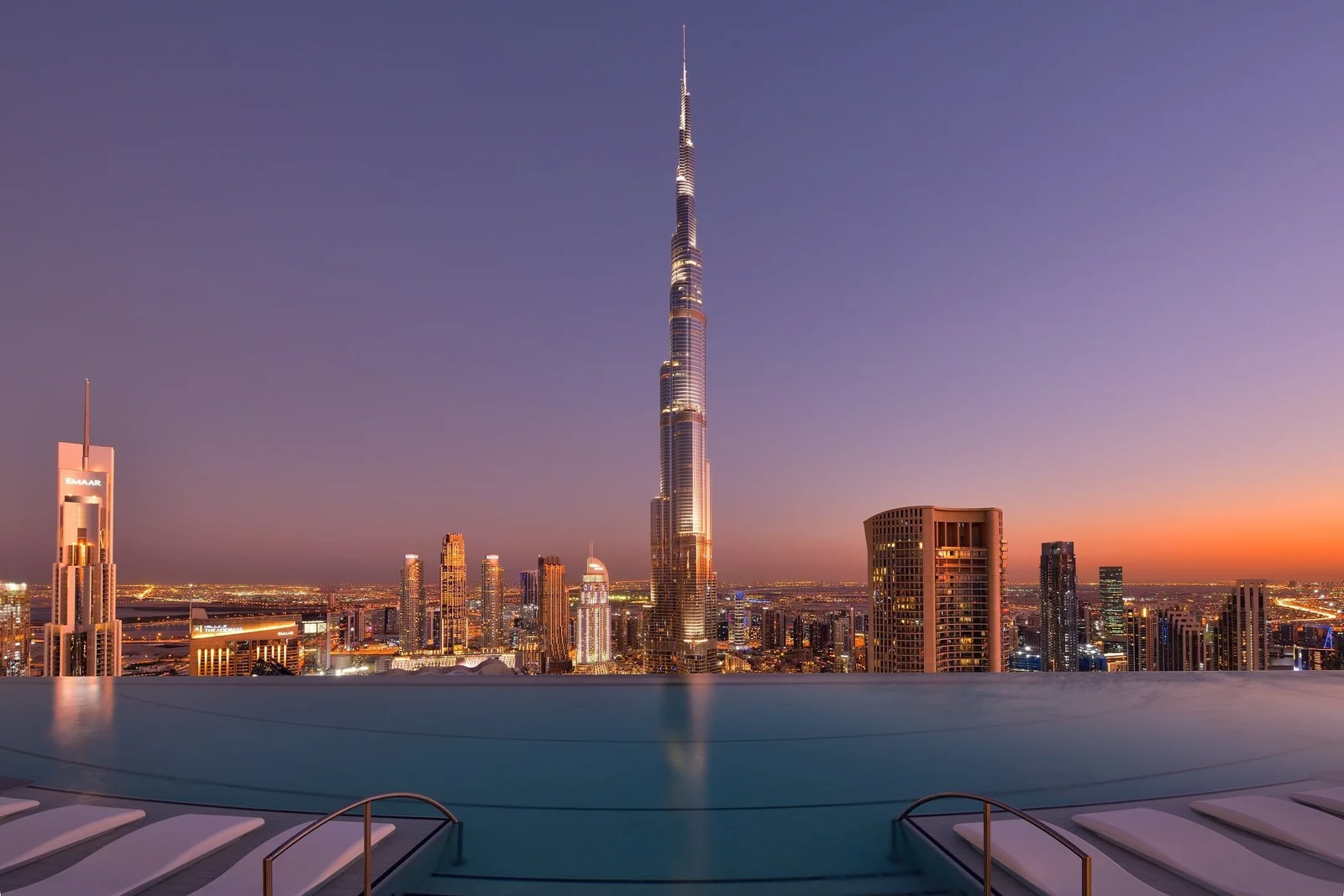




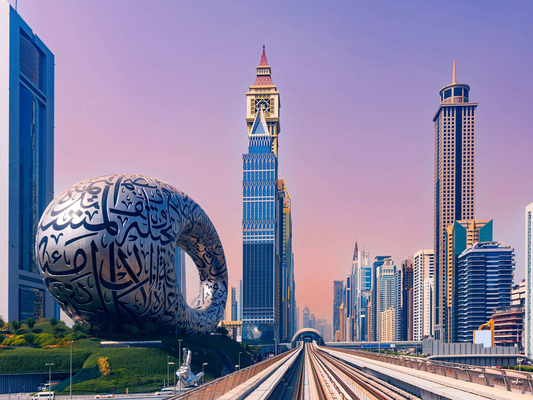
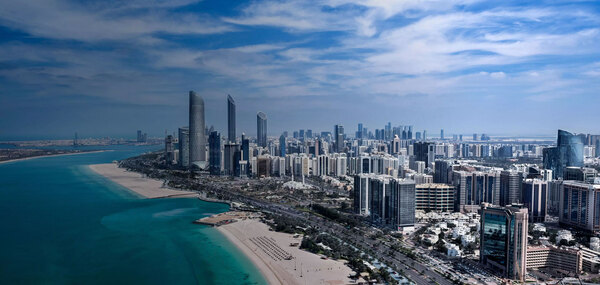



The digital horizon of the United Arab Emirates (UAE) is not just changing; it is undergoing quantum acceleration. With the D33 Vision propelling Dubai toward global financial and technological hub status, the bar for digital excellence is set higher than anywhere else. In this ecosystem where tolerance for delay is almost non-existent, where users are accustomed to luxury, and competition is global, your online presence is either an elite digital asset or an invisible liability.
A simple, even well-designed, website is obsolete. To compete in 2025 and beyond, businesses need an ultra-fast conversion machine, perfectly adapted to the culture, law, and technical specificities of the Gulf. This is where Headless Architecture and Hyper-Local SEO come into play, transforming your Dubai & Abu Dhabi website creation project into a weapon for dominating the SERPs (Search Engine Result Pages).
This definitive guide, designed for entrepreneurs, CMOs, and developers, dissects the strategies and practical steps required to not only rank your Dubai & UAE website but to propel it above the competition by leveraging the latest trends in AI and performance.
1. The Foundation of Emirati Digital Excellence: Architecture & Law
Success in the UAE begins with unwavering technical and legal foundations. Ignoring these pillars is building on desert sand. The era of the monolithic CMS (where content and presentation are merged) is ending, especially for high-calibre projects requiring optimal performance and flexibility.
1.1. Headless Architecture: The Performance Imperative
Headless Architecture (or decoupled architecture) is quickly becoming the standard for any serious Dubai & UAE website development targeting the UAE. It separates the "body" (the Backend, the Content Management System or CMS) from the "head" (the Frontend, the user-facing interface).
How Does It Work?
-
The Backend (The Body): A CMS like Contentful, Strapi, or Sanity manages the pure content (text, images, data) and distributes it via APIs (Application Programming Interfaces). It is channel-agnostic.
-
The Frontend (The Head): Modern frameworks (Next.js, Nuxt.js, React) fetch this content via the API and present it to the browser at blinding speed.
The SEO Benefit in the UAE: Speed is ranking. By using technologies like Static Site Generation (SSG) or Server-Side Rendering (SSR) enabled by Headless, your Dubai & UAE website's Core Web Vitals (LCP, FID, CLS) achieve perfect scores, signaling a superior quality level to Google.ae compared to the competition.
1.2. The Legal Framework: PDPL 2021 and Dubai & UAE Website Development Compliance
The Emirati legal landscape has significantly evolved with the promulgation of Federal Decree-Law No. 45 of 2021 on Personal Data Protection (PDPL). This is the local and rigorous equivalent of the European GDPR.
Any Dubai & UAE website creation agency must integrate this compliance from the design phase:
- Explicit Consent: Your Dubai & UAE website's cookie management system must obtain clear, granular, and unambiguous consent before any collection of personal data.
- Right to Be Forgotten and Rectification: Your backend systems must allow Emirati and international users to request the deletion or modification of their data.
- Data Transfer: If your hosting is not in the UAE, you must ensure that transferring data abroad complies with PDPL rules.
1.3. Data Residency: Choosing Local Hosting
The choice of hosting is an often-underestimated SEO and security factor. Latency (the response time between the server and the user) is critical.
- Criterion No. 1: Time to First Byte (TTFB): For a user based in Dubai, a server located in Europe or Asia can add hundreds of milliseconds of latency. A high TTFB penalizes the user experience and your SEO ranking.
- Solution: Opt for leading Cloud providers or Data Centers with a physical Point of Presence (PoP) in Dubai or Abu Dhabi. A localized CDN (Cloudflare, Akamai, etc.) is imperative to cache static content closest to the consumer.
- Legal Recommendation: For government, health, or financial companies, data residency on UAE territory may be a non-negotiable requirement, making local Dubai & UAE website development the only viable option.
2. Current Trends and Key Statistics: The Digital Ecosystem 2025+
The Emirati digital landscape is a kaleidoscope of innovation. Content and development strategies that do not account for AI, hyper-mobility, and the Metaverse are already behind.
2.1. The Hyper-Growth of Generative AI and Personalized Content

The UAE is a global leader in AI adoption. This priority impacts how Google ranks content.
- Augmented Responses (SERP): Google now favours content that is factual, accurate, and demonstrates verifiable authority (EEAT: Experience, Expertise, Authority, Trust). Your content must be structured (JSON-LD Schema) to be easily ingestible by Google's AI models.
- Real-Time Personalization: A modern Dubai & UAE website uses AI to adapt the browsing experience to the user:
- Dynamic Offers: A customer based in Abu Dhabi may see a different offer than an expatriate in JLT (Jumeirah Lakes Towers).
- Language and Tone: Automatic adaptation of language (Standard Arabic vs. English) and tone (more formal for B2B, more lifestyle for luxury) based on the user profile. This is made possible by Headless, where AI can modify content via the API without touching the presentation layer.
- Key Statistic: Over 90% of internet users in the UAE use mobile for daily internet access, placing mobile performance at the top of the ranking criteria.
2.2. The Mobile-First Imperative: Ultra-Performance Demanded by UAE Users
Smartphone penetration in the UAE exceeds 100%. Mobile is not an option; it is the primary access, transaction, and conversion point.
- Core Web Vitals are Luxury Criteria: In the Emirati market, fluidity is perceived as a luxury service. An LCP (Largest Contentful Paint) exceeding 2.5 seconds is a failure. Dubai & UAE website development must aim for an LCP under 1.5 seconds.
- Aggressive Optimization: This involves:
- Eliminating unnecessary JavaScript.
- Using lazy loading for non-critical images.
- Adopting next-generation image formats (WebP, AVIF).
- A competent Dubai & UAE website creation agency will use audit tools like Lighthouse to ensure a mobile performance score consistently above 95.
2.3. Integrating the Metaverse and Digital Twins: Beyond the Simple Dubai & UAE Website
With the "Dubai Metaverse Strategy" aiming to create tens of thousands of virtual jobs, the UAE is at the forefront of Web3. Your website becomes a portal.
- Websites as 3D Gateways: Real estate, tourism, and event companies integrate interactive virtual tours, 3D showrooms, or "jump links" to Metaverse experiences.
- Technical Challenge: Integrating these lightweight 3D models and immersive portals can harm loading speed. Headless is essential here because it allows heavy components to be loaded selectively only when the user accesses them, while maintaining the integrity and speed of the homepage (the SEO entry point).
3. Practical Guide: Mastering Multilingual SEO (RTL vs LTR)
This is the most technical and strategic specificity of SEO in the UAE. Multilingualism is not limited to adding a translation. It involves managing two fundamentally different user experiences and keyword sets: English (LTR: Left-to-Right) for the expatriate community and international trade, and Arabic (RTL: Right-to-Left) for the local population and cultural authority.
3.1. Competitive Audit: What Your Dubai & UAE Web Agency Must Analyze
A local market audit is much more complex than elsewhere. It's not just about seeing what competitors rank for, but how they do it in both languages.
- Geographic Intent Analysis: Compare queries. The term "Best Real Estate Agent Dubai" (English) is often searched by international investors or recent expatriates. The equivalent query in Arabic (أفضل وكيل عقارات دبي) may target local clientele seeking specific transactions or legal advice. The page content must adapt to this intent.
- The Challenge of Arabic SEO: Arabic, being a Semitic language, has a different morphological structure. Keywords are often longer and require linguistic expertise to identify query variations. A simple literal translation is a fatal mistake.
- Content Structure: Determine if competitors use subdomains (
ar.example.ae), subdirectories (example.ae/ar/), or distinct country domains. For the UAE, usinghreflangtags coupled with a unique TLD (.ae) is often the cleanest and most effective solution for local SEO.
3.2. Technical Hreflang Deployment: Strategies for Arabic (ar-ae) and English (en-ar)
Incorrect implementation of hreflang tags is one of the most common and damaging technical errors for a multilingual Dubai & UAE website. These tags tell Google the relationship between your equivalent pages in different languages.
The Golden Hreflang Rule:
- Self-Reference: Every page must point to itself.
- Bi-Directional: If page A points to page B, page B must point to page A.
- X-Default: It is crucial to specify a default page (often the English version) for users that Google cannot identify or who come from an untargeted region.
3.3. Mastering RTL CSS and UX
The switch from LTR to RTL goes far beyond simple text reversal. An experienced Dubai & UAE web agency masters critical CSS adjustments:
- UI Element Inversion: Navigation (menu), progress bars, carousels, and arrow icons must be horizontally inverted.
- Mirroring Elements: Margins and padding that were on the left for LTR must be applied to the right for RTL, and vice versa.
- Form Elements: Checkboxes and radio buttons are aligned to the right of the text in Arabic.
4. Pitfalls to Avoid and Best Practices for a Dubai & UAE Website Creation Agency
In a market where money and technology flow quickly, mistakes are costly in missed opportunities. The value of a Dubai & UAE website creation agency lies in its ability to avoid these local pitfalls.
4.1. The Pitfall of the Non-Localized International Partner
Hiring a non-UAE provider for initial cost reasons is a false economy. The lack of local knowledge translates into SEO penalties and legal gaps.
- Lack of Legal Knowledge: An international partner will ignore the PDPL and the specific requirements of free zones. For example, transparency requirements for companies based in free zones like DIFC (Dubai International Financial Centre) or DMCC are specific and must appear in your Dubai & UAE website's legal notices.
- Hosting Error: Choosing a cheap server in Europe or the US will lead to the aforementioned latency issues (TTFB), making your site slow for 99% of your target audience.
- Cultural Misunderstanding: The tone and visuals must reflect the market's sensitivity and expectations. Images or messages that work in other cultures may be inappropriate or ineffective in the UAE.
4.2. Legal Assurance: License, Domain, and Intellectual Property
Dubai & UAE website development is inseparable from the Emirati legal framework.
- The .ae Domain: The Trust Signal: The
.aeextension is a powerful signal of local trust and credibility. To obtain it, your company must have a valid commercial license in the UAE, managed by the TDRA. This TLD, combined with local hosting, sends the strongest possible SEO signal to Google.ae. - The Free Zones: If your business is based in a free zone (which offers benefits such as full foreign ownership and absence of corporate tax until 2023), your online documentation must reflect this. You can learn more about this approach by consulting [Link to the guide on Dubai Free Zones].
- Protection of Digital Assets: The Dubai & UAE web agency must ensure that you own the full source code, license rights, and created content. It is crucial to inform yourself about [Link to the article on Intellectual Property Laws] to protect your investment and digital creations.
4.3. Netlinking: The Authority of .ae and .gov Links
Netlinking remains a fundamental ranking factor, but its quality in the UAE is hyper-localized.
- Local Value: A link from an authoritative Emirati site is much more valuable than an international link. Target:
- Leading Emirati press publications (Gulf News, The National, Arabian Business).
- Relevant government or semi-government websites (.gov.ae, .org.ae).
- High-authority local business directories.
- Targeted PR Strategy: A competent Dubai & UAE website creation agency will use its networks to generate natural mentions and links by organizing local events, publishing exclusive research data on the Emirati market, or contributing expert articles. The goal is to build E-E-A-T authority (Experience, Expertise, Authority, Trust) in the eyes of the local digital ecosystem.
5. Concrete Case Studies and Applications: Post-2024 Success Stories
The application of these principles transforms ambitious projects into market leaders. These examples, based on real scenarios, illustrate the potential of strategic Dubai & Abu Dhabi website creation.
5.1. Case 1: The Luxury Real Estate Portal (B2C & Headless)
- The Challenge: A large real estate group wanted to surpass the competition in loading speed and offer 3D tours of ultra-luxury residences without compromising SEO.
- The Dubai & UAE website development Strategy:
- Architecture: Headless (Next.js + CMS for managing 10,000+ properties).
- Localization: Bilingual content (Arabic/English) with
ar-aeanden-aetags. Search for hyper-local keywords like "Emirates Hills villa price" or "buy JBR penthouse sea view". - Performance: Asynchronous loading of 3D models. CDN with PoP in Dubai.
- Key Result: 60% reduction in TTFB and 45% increase in Click-Through Rate (CTR) on SERPs, as speed became an implicit trust factor for the affluent audience. Time spent on the site increased by 70% thanks to the fluidity of navigation and virtual tours.
-
5.2. Case 2: The B2B FinTech Platform (Security and Trust)

- The Challenge: A FinTech company was launching a payment solution in the DIFC free zone and needed instant credibility with CFOs.
- The Dubai & Abu Dhabi website creation Strategy:
- Design and UX: Extremely clean design, focused on data and compliance. The site was designed to be 100% accessible and readable, signaling professionalism.
- Content: Creation of PDPL compliance guides and technical White Papers optimized for B2B long-tail searches, such as "DIFC API payment solution PDPL compliance".
- Schema: Intensive use of
OrganizationandReviewschema to strengthen E-E-A-T and achieve Rich Snippets in search results.
- Key Result: Domination of keywords related to "trust" and "regulation." The average value of leads generated by the Dubai & UAE website was 50% higher than traditional marketing leads, as the content had already established authority.
5.3. Case 3: The Higher Education Institution (Global Acquisition)
- The Challenge: A new university needed to recruit international students (India, China, GCC) and local students, requiring complex multilingual management.
- The Dubai & UAE web agency Strategy:
- Architecture: Use of a Headless CMS to centrally manage academic calendars, programs, and admission requirements, with a React-built user interface.
- Global SEO: Deployment of ultra-precise
hreflangtags:en-ae,ar-ae,en-in(India),zh-cn(China), to specifically target audiences in their languages and geographies. - Content: Creation of landing pages optimized for voice search (e.g., "how to apply to Dubai university") and structured FAQs to answer admission queries.
- Key Result: 120% increase in organic traffic in the targeted countries within the first 12 months, and a 30% reduction in bounce rate due to the platform's speed on mobile (critical for international students). The site became the reference for admission searches in the UAE.
6. The Next Wave: Predictive and Decentralized Dubai & UAE Website Development (Web3)
The future of the web in the UAE is not just fast and compliant; it is intelligent and predictive. Companies that invest in the right architecture today will be ready for tomorrow's innovations.
6.1. Hyper-Personalization via Machine Learning
Tomorrow's Dubai & UAE website will use Machine Learning to anticipate user needs before they even click.
- Predictive Recommendation: For e-commerce, algorithms will not only recommend similar products but will anticipate the next product based on the user's life cycle (e.g., purchasing an accessory for a recently acquired product).
- Dynamic Pricing (Hospitality/Tourism): AI will adjust the display of prices and packages in real-time based on factors like perceived demand, geolocation, and purchase history (propensity to spend). Headless allows AI to interact directly with the content via the API, without requiring a complete redeployment.
6.2. Integrating Web3 and Digital Assets (NFTs)

The UAE is adopting Non-Fungible Tokens (NFTs) and blockchain technology at a record pace. The Dubai & UAE web agency positioned on Web3 is preparing its clients for a new form of loyalty.
- NFTs as Digital Passports: Major Emirati luxury brands can use NFTs as "digital passports" granting access to private areas of the Dubai & UAE website, VIP events, exclusive presales, or personalized services.
- Advantage: This creates traceable and rewarded digital loyalty, linking the virtual asset to the physical customer experience.
- Decentralized Identity: Preparing the interface (Frontend) to interact with digital wallets to allow users to connect without a password or email, using their Decentralized Identity (Self-Sovereign Identity). This increases security and UX fluidity, essential criteria for the Emirati market.
6.3. Preparing for 6G and the "Spatial Web"
Dubai & UAE website development must anticipate the deployment of the 6G network, which will bring theoretical speeds of several terabytes per second.
- Ultra-Rich Content: These speeds will enable the instantaneous loading of 4K/8K experiences, complex 3D models, and augmented reality interactions directly in the browser. Headless architecture, which separates logic from display, will be the only way to manage this increasing complexity without the site collapsing under the weight of business logic.
- The Role of Headless: By using APIs to manage everything (content, inventory, users, payments), you ensure that the day 6G becomes the standard, your Dubai & Abu Dhabi website creation can instantly adapt by modifying only the "Frontend," without overhauling the entire system.
7. Detailed Expert FAQ & Ultimate Launch Checklist
This section condenses essential information for practical application, serving as an operational summary for the successful launch of your Dubai & Abu Dhabi website creation project.
Expert FAQ on Dubai & UAE Website Development
Q1: What is the realistic cost for a professional, performance-oriented (Headless) website creation in Dubai & Abu Dhabi ?
A: The investment is strategic. For a high-performance bilingual site (Headless, Next.js or Nuxt.js) with custom API integrations and a solid SEO/Legal strategy—the minimum to be competitive in luxury or FinTech in the UAE—the initial cost generally ranges between 35,000 AED and 150,000 AED (approx. 8,800 EUR to 37,500 EUR), excluding content and advertising budgets. Maintenance costs are often higher than a monolithic site, but profitability (conversion rates and SEO gains) is exponentially superior.
Q2: How long does it take to start seeing SEO results with a new Dubai & UAE web agency?
A: For the highly saturated Emirati market, you must be realistic. After the initial launch of a new Dubai & UAE website, allow 3 to 6 months for Google to correctly index hreflang tags and data structures (JSON-LD Schema). Dominating competitive keywords (those that generate the most value and are often targeted by Dubai & UAE website development) requires a constant effort of high-quality content and local netlinking over 9 to 18 months. The quality of the starting code (speed) is the main accelerator factor.
Q3: Is it really necessary to have content in Arabic if my target is the expatriate community?
A: Yes, it is a strategic necessity for SEO and credibility. Even if your target audience speaks English, the absence of an Arabic version on your Dubai & UAE website sends a negative signal to Google and local authorities regarding your commitment to the market. Furthermore, a significant portion of Emiratis and Middle Eastern expatriates who consume in Arabic is missed. Arabic signals local authority, enhances credibility (E-E-A-T), and opens up market segments inaccessible to your lazy competitors.
Q4: What is the most common technical error companies make during website creation in dubai?
A: It is invariably the wrong choice of hosting/CDN. Opting for global solutions without a Point of Presence (PoP) in the Middle East. This creates high latency (TTFB), causes your Core Web Vitals (LCP/FID) to drop, and directly penalizes your SEO ranking. You must always opt for localized Cloud hosting or a top-tier CDN with a PoP in Dubai to guarantee a fluid user experience on mobile, which is the standard.
Q5: What is the impact of VARA (Virtual Assets Regulatory Authority) regulation on the website development in Dubai & UAE of Web3 companies?
A: It is critical. VARA regulates activities related to virtual assets in Dubai (excluding financial free zones like DIFC). If your Dubai & UAE website creation agency integrates wallets, NFT sales mechanisms, or any cryptocurrency-related service, it must ensure that the site displays clear legal warnings, that KYC/AML processes are integrated, and that the company holds the appropriate VARA license. The site must serve as clear documentation of the company's compliance.
Ultimate Launch Checklist: Your Next Steps to Dominate
Use this checklist as your roadmap to turn your Dubai & Abu Dhabi website creation investment into a sustainable SEO domination asset.
-
Headless Architecture: The architecture is officially decoupled (Frontend/Backend) to ensure maximum speed and multi-channel scalability.
-
Legal Validation: The commercial license covers e-commerce or digital services, and the legal notices reflect the status (free zone or onshore).
-
PDPL Compliance: Privacy policy and cookie consent mechanism (banner) comply with Federal Decree-Law No. 45 of 2021.
-
Localized Hosting: Server or CDN PoP chosen in Dubai/Abu Dhabi for optimal TTFB and LCP.
-
.ae Domain Acquired: The local domain is registered to strengthen authority in the eyes of Google.ae.
-
Hreflang Implementation:
hreflangtags correctly implemented for Arabic (ar-ae) and English (en-ae) versions. -
Bilingual Keyword Audit: Semantic research conducted in English and Arabic, with clear distinction of local search intent.
-
GMB Optimization: Google My Business listing claimed, verified, and optimized for local search (critical for mobile navigation).
-
JSON-LD Schema:
Organization,FAQ, and other relevant schemas deployed to achieve Rich Snippets. -
Local Backlinks: Netlinking strategy established to target authoritative UAE sites (.ae, .gov) to build E-E-A-T.
-
Mobile-First Design: Design and development prioritized for the mobile experience, including impeccable RTL UX.
-
Expert Partner: Contract finalized with a website creation agency in Dubai that demonstrates verifiable expertise in Headless, RTL SEO, and PDPL compliance.
(This detailed guide is designed to be a definitive resource. Its density and specificity should grant it maximum authority on the SERPs for the targeted keywords, transforming your content investment into a lasting competitive advantage.)


