













































The global real estate industry, an economic titan valued at hundreds of trillions of dollars, is undergoing its most significant technological shift since the invention of the land registry. We are no longer discussing mere cryptocurrencies; we are talking about a radical trust infrastructure. Blockchain is redefining how we buy, sell, and manage land. In 2025, efficiency is no longer a luxury—it is a survival requirement for industry stakeholders.

Why This Topic is Critical Now?
Traditionally, a real estate transaction is an obstacle course: weeks of verification, mountains of paperwork, and intermediary fees that erode profitability. Blockchain provides a surgical solution to these frictions. With the emergence of technological hubs like the Emirates, the demand for website development Dubai & UAE specializing in PropTech has exploded, proving that the digital transition is already an operational reality.
The Foundation: Anatomy of a Real Estate Revolution
Blockchain is often misunderstood. In the real estate context, it is not a speculative asset but a distributed, immutable, and transparent ledger.
What is Blockchain Applied to Land?
Imagine a land registry where every title deed, mortgage, and easement is engraved in a digital stone shared across thousands of computers. No one can erase a line without alerting the entire network. This marks the end of double-selling and document fraud.
Key Principles for Real Estate:
- Immutability: Once a property transfer is validated, it is impossible to modify retroactively.
- Tokenization: The division of a real estate asset into digital tokens, allowing for fractional ownership.
- Smart Contracts: Computer protocols that automatically execute contract clauses (e.g., transferring the title upon receipt of funds).
For companies looking to integrate these technologies, collaborating with a top-tier web agency Dubai has become the initial step in building secure interfaces between blockchain protocols and end-users.
Current Trends and Key Statistics (2025-2026 Horizon)
The 2025 landscape shows unprecedented acceleration. What was "experimental" in 2021 is now "standard."
Impactful Global Statistics:
- Cost Reduction: It is estimated that using blockchain reduces transaction fees by 35% to 55% by eliminating redundant verification intermediaries.
- Speed: The average closing time for a sale has dropped from 30 days to less than 10 minutes on certain tokenized platforms.
- Tokenization Volume: The tokenized real estate asset market is expected to exceed $1.5 trillion by 2030.
Major Trends for 2025:
- RWA Integration (Real World Assets): Decentralized Finance (DeFi) now uses physical real estate as collateral for instant loans.
- State Digital Sovereignty: More governments (Sweden, Georgia, UAE) are migrating their official registries to private or hybrid blockchain networks.
- AI + Blockchain: Artificial intelligence analyzes market data while blockchain guarantees the integrity of that data.
In this high-tech context, website development Dubai & UAE is no longer limited to displaying listings but creating true cryptographic transactional ecosystems.
Practical Guide: Implementing Blockchain in Your Land Processes
Moving from theory to practice requires a rigorous methodology. Here are the crucial steps for digitalizing an asset or registry.
Step 1: Data Audit and Digitization
Before writing anything on a blockchain, the source data must be "clean." This includes legal verification of titles and certified digitization of cadastral plans.
Step 2: Protocol Choice
The choice between a public blockchain (like Ethereum or Polygon) and a private one (Hyperledger) depends on your privacy needs. For a consumer-facing platform, website creation Dubai must integrate ergonomic digital wallets.
Step 3: Smart Contract Development
This is the heart of efficiency. The contract must provide for:
- Automatic escrow of funds.
- Integrated Identity Verification (KYC/AML).
- Simultaneous ownership transfer upon payment (Atomic Swap).
Comparative Table: Traditional Real Estate vs. Blockchain Real Estate
To succeed in this transformation, partnering with a specialized web agency Dubai & UAE ensures a robust architecture capable of supporting thousands of simultaneous transactions.
H2: Pitfalls to Avoid and Best Practices
Technological efficiency does not replace strategic vigilance. Many projects fail due to lack of preparation.
Common Pitfalls:
- Ignoring the Regulatory Framework: Blockchain is global, but real estate is local. Every country has its laws regarding property transfer.
- Overly Complex UI: If the investor doesn't understand how to buy their "token," they won't. Mobile app development in Dubai must focus on "one-click" simplicity.
- Oracle Security: Oracles are the bridges that bring real-world information (e.g., confirmation of a building inspection) to the blockchain. If the oracle is compromised, the contract is too.
Best Practices:
- Hybridization: Start by using blockchain for document tracking before moving to full ownership transfer.
- Code Audit: Never launch a smart contract without a security audit by an independent firm.
- Trust Marketing: In a trust-based sector, utilizing a personal branding agency in Dubai helps PropTech leaders establish authority and credibility.
Case Study: The Dubai Model (DLD)

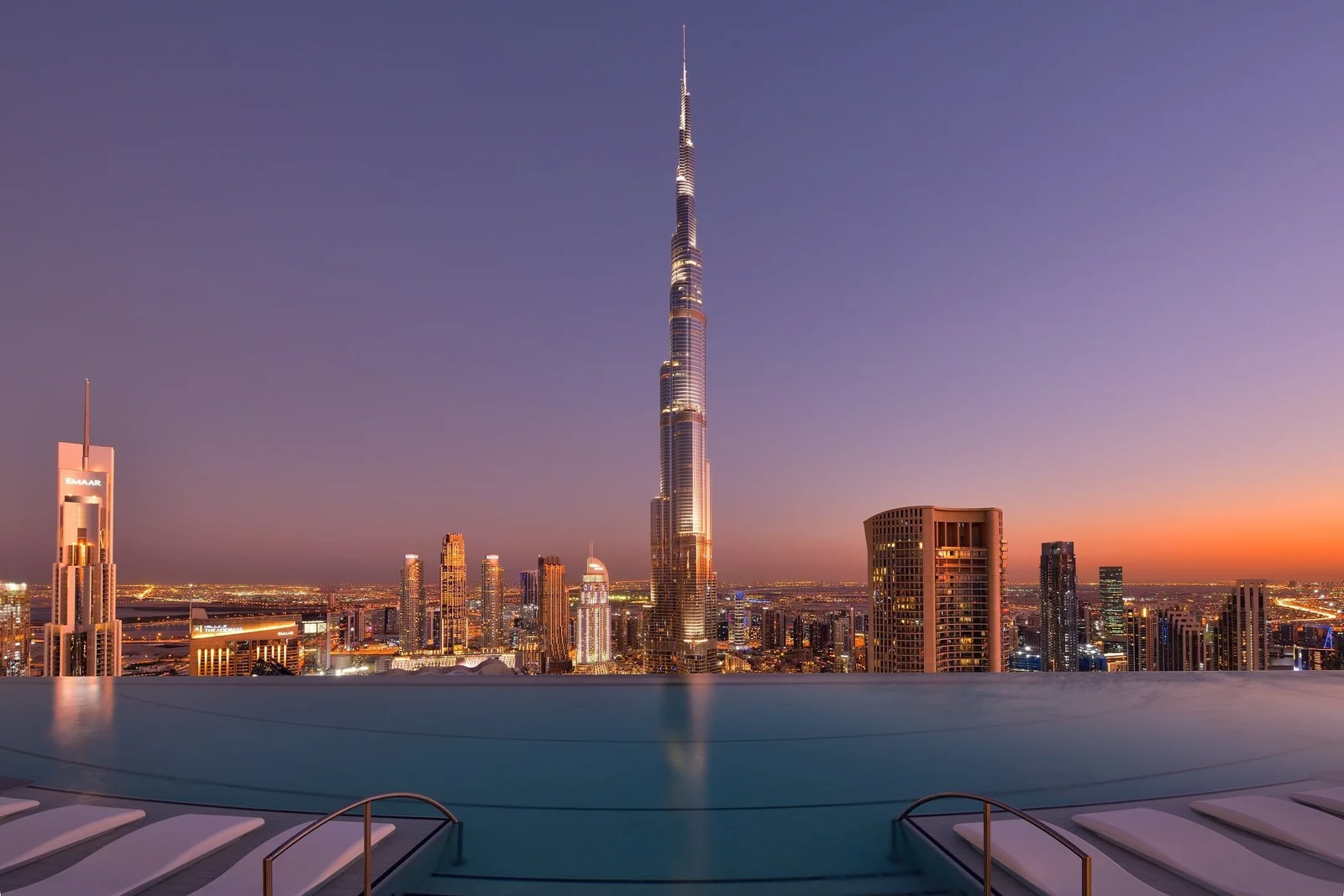
Dubai has become the global laboratory for blockchain real estate. The Dubai Land Department (DLD) was among the first in the world to adopt a "Blockchain First" strategy.
Why is it a success?
Thanks to a clear government vision, all real estate transactions are now recorded on a secure platform. This allows tenants and buyers to sign contracts in a completely paperless manner.
The local ecosystem, supported by every website creation agency Dubai & UAE, has successfully created bridges between banking services, utility providers, and the land registry. The result: a fluidity that attracts foreign capital on a massive scale.
For developers, marketing consultancy in Dubai has shifted toward educating clients on the benefits of these digital property titles, which are safer and more liquid.
The Next Wave: Toward a Frictionless World (2026-2030)
The future of real estate is not limited to blockchain alone. It is the interconnection of technologies that will create value.
Digital Twins
Every building will have its digital double on the blockchain. This twin will contain the entire history: construction materials used, energy consumption records, and repair history.
Metaverse and Pre-visualization
Buying off-plan (VEFA) will occur after an immersive visit, where the reservation contract will be a secure NFT (Non-Fungible Token). Mobile app development in Dubai will increasingly integrate augmented reality coupled with crypto payments.
Total Liquidity
Real estate, once the most illiquid asset, will become as easy to trade as stocks thanks to secondary token markets.
FAQ: Everything You Need to Know About Blockchain Real Estate
Does blockchain replace notaries?
Not necessarily. In 2025, the role of the notary is evolving into that of a "data entry certifier." They guarantee that the information entered into the blockchain is legally valid at the time of its registration.
Is tokenization legal everywhere?
No. Some countries are ahead (Switzerland, UAE, France), while others are still in a gray area. A marketing consultancy in Dubai will always tell you that compliance is your primary selling point.
What is the cost to digitalize a national land registry?
The initial investment is significant (infrastructure and training), but the economies of scale over 10 years are colossal. Fraud reduction alone can make the project profitable.
How to choose your technological partner?
Look for a website creation agency Dubai & UAE that has proven experience in Web3 and cybersecurity. Design is important, but the strength of the smart contract is vital.
Practical Summary and Next Steps
The efficiency of blockchain for real estate transactions is no longer a matter of debate—it is a mathematical and economic reality. For industry professionals, inaction is the highest risk.
Your Action Checklist:
- Educate your teams: Understand the difference between fungible and non-fungible assets.
- Identify a pilot project: Start with document management for a single building.
- Polish your brand image: Use a personal branding agency in Dubai to communicate your shift to the cutting edge of technology.
- Develop your tools: Launch a platform via a competent web agency Dubai & UAE to offer a modern user experience to your investors.


